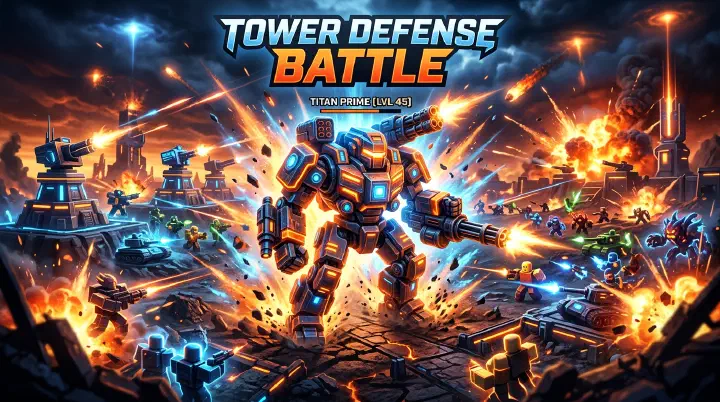
It’s Wave 14. Your base has 12,000 HP left. You’re staring at a timer counting down from 45 seconds, and your only Titan — a CEN you barely managed to scrape together — is sitting at 0 energy because you spent the last three waves panic-spawning grunts to plug holes in your line. Your teammate rage-quit after Wave 9 when a single Titan Brawler walked through your entire frontline like it was made of paper. Now you’re alone, broke, and watching three enemy Titans barrel down the mid lane while your own grunts evaporate before they even swing.
You lost this match in Wave 3. You just didn’t know it yet.
That feeling — the slow, suffocating realization that you’ve fallen too far behind to recover — is what happens when you play Blockade Battlefront like a farming simulator. Most players treat the early waves like a tutorial. They build a nice, safe wall of grunts. They wait for income. They “scale.” Then Wave 8 hits, they’re sitting on 400 CEN, and an enemy Titan wrecks their entire setup in eight seconds because they never learned how to rush.
This guide isn’t about farming safer. It’s about ending waves before the enemy can scale at all.
Why Wave Rushing Works (And Why Most Players Can’t Do It)
Blockade Battlefront snowballs fast. The player who controls the first three waves controls the entire match. Most guides tell you to “build a solid economy first.” That’s fine if you’re playing against AI. Against real players who know what they’re doing, that advice gets you killed.
Here’s why. Every wave you clear faster than your opponent does two things: it denies them CEN from their own kills (because your units cross the map and pressure their base), and it forces them to spend CEN reactively instead of building their own push. A player stuck defending can’t build a Titan. A player who can’t build a Titan loses.
The failure mode looks like this. You spawn a balanced line — maybe six grunts and a shooter — and you clear Wave 2 in 35 seconds. Your opponent spawns ten grunts aggressively, kills Wave 2 in 18 seconds, and their surviving grunts are already in your base dealing damage by the time you’re done. They’ve spent more CEN than you, sure. But they gained map pressure, forced you to spend CEN on defense, and set themselves up for a double-income Wave 3 while you’re still recovering.
The math isn’t complicated. One grunt costs 15 CEN. Ten grunts cost 150. If those ten grunts clear a wave 17 seconds faster and deal 800 damage to the enemy base, you’ve bought yourself a massive advantage for a price difference that pays itself back in half a wave.
Most players don’t rush because it feels unsafe. Spending 150 CEN on grunts when you only have 200 feels like gambling. It isn’t. It’s an investment with a guaranteed return — if you know when to do it, how to do it, and when to stop.
The Wrong Way to Rush (Don’t Do This)
Before we get to the right way, let’s kill the common mistakes.
Mistake one: all-in on Wave 1. Some players watch one YouTube video and decide to dump their entire starting CEN into grunts immediately. Then Wave 1 spawns two shooter types, their grunts die in a clump, and they’ve got nothing for Wave 2. You don’t rush Wave 1. Wave 1 is about positioning and learning the enemy’s spawn pattern. Spend 60-75 CEN, clear it cleanly, and bank the rest.
Mistake two: rushing without a follow-up plan. Okay, you dumped 150 CEN on Wave 2 and cleared it fast. Great. Now what? If your answer is “wait for Wave 3,” you just threw away your lead. The entire point of a fast Wave 2 clear is to create a CEN surplus before Wave 3 spawns. If you don’t have a plan for that surplus — usually a Titan or a massive grunt dump — you spent CEN for nothing.
Mistake three: rushing when the enemy already has a Titan. This sounds obvious, but you’d be amazed how many players keep spawning grunts into a CEN-level Titan. Grunts don’t kill Titans. They feed them CEN. If the enemy has a Titan up and you don’t, you aren’t rushing anymore. You’re donating.
The Right Way: Wave-by-Wave Breakdown
Here’s how an actual rush looks from a player who’s done this two hundred times.
Wave 1 (0:00-0:45): Spawn 4 grunts and 1 shooter. Total cost: 75 CEN. This clears every standard Wave 1 composition without issue. Don’t overthink it. Your goal isn’t speed here — it’s efficiency. You want 125+ CEN entering Wave 2, and you want your units positioned slightly forward so they start Wave 2 closer to the enemy side.
Wave 2 (0:45-1:30): This is your first decision point. Look at the enemy’s Wave 1 clear. Did they over-spawn? Are they low on CEN? If they spawned more than 6 grunts, they’re probably sitting on under 100 CEN. If they spawned fewer, they might be saving for something.
Against a low-CEN opponent: dump 10 grunts immediately. Cost: 150 CEN. You’ll clear Wave 2 in roughly 15-20 seconds, and your surviving grunts will cross into their base. They’ll have to spawn defenders, which delays their Wave 3 setup. You’re now ahead.
Against a high-CEN opponent (they saved, or they spawned a Titan): scale back. Spawn 6 grunts and 1 shooter. Cost: 105 CEN. Don’t engage in a CEN race you can’t win. Clear efficiently and save for your own Titan on Wave 3.
Wave 3 (1:30-2:15): This wave decides the match in about 60% of rush games. If you won the Wave 2 trade — if your grunts crossed and forced enemy spending — you should have 200+ CEN as Wave 3 starts. Your opponent, who had to defend, probably has less.
Spawn your first Titan immediately. Don’t wait to see what the Wave 3 composition is. Titans have travel time, and you want yours on the field before theirs. If you spawned a CEN Titan here, you’ve just seized control of the mid-game. If you spawned a cheaper Titan because you had to, that’s fine too — just make sure it’s hitting the field before Wave 3 enemies do.
Wave 4-6 (2:15-4:30): You’re now in snowball territory. Your Titan is alive, your grunts are supporting it, and you’re clearing waves faster than the enemy can rebuild. The key here is overwhelming rather than efficient. Don’t try to save CEN. Dump grunts in front of your Titan so it doesn’t take damage. The faster you clear, the less time the enemy has to build their own Titan stack.
If you get to Wave 6 with two Titans and the enemy has none, you’ve won. It might take five more minutes for the base to fall, but the economic gap is now unrecoverable.
When to Rush, When to Farm, When to Pivot
Not every match should be rushed. Here’s the decision framework I use:
Rush if: You’re first spawn, the enemy spawned light on Wave 1, or you’re running a CEN-accelerant loadout. Also rush if the map has short lanes — less travel time means your grunts apply pressure faster.
Farm if: The enemy opened with a Titan (some players do this on Wave 2 now), you’re on a long-lane map, or your loadout is built for late-game scaling. If the enemy is already ahead on board presence, don’t try to out-rush them. Out-last them.
Pivot from rush to farm if: You lose a Titan trade in Wave 3-4, the enemy gets two shooters up before Wave 5, or you find yourself spending more than 80% of your per-wave income on defense. A failed rush isn’t a lost game unless you keep trying to rush. The players who climb are the ones who recognize their rush failed and switch to attrition before they’re broke.
Pivot from farm to rush if: The enemy over-commits to a single lane, you catch their Titan out of position and kill it, or they make a bad Wave 6 spend and you suddenly have a 150+ CEN lead. Opportunities to steal a game appear fast. You have to take them.
The hardest skill in Blockade Battlefront isn’t rushing. It’s knowing when to stop.
The Counter-Intuitive Truth: Sometimes You Let the First Titan Die
Here’s something the community doesn’t talk enough about. Players get emotionally attached to their first Titan. They’ll dump 100 CEN in grunts to save a Titan that’s clearly doomed. Don’t.
If your first Titan is surrounded by three enemy shooters and their own Titan is fresh, let it die. Grunts trying to save a dead Titan are grunts not building your next push. A common pattern in high-level play looks like this: Player A commits everything to save Titan #1. Player B lets Titan #1 die, builds Titan #2 immediately, and now has board control while Player A is recovering from their “rescue” attempt.
Your Titan is a tool. It’s not your identity. If it’s dying, make sure it deals damage on the way out, then replace it. The player who cycles Titans faster almost always wins, because each new Titan spawns at full health while the enemy’s is chipped.
Another counter-intuitive move: intentionally slow-clear Wave 1. Most players try to clear Wave 1 as fast as possible. If you’re running a late-game loadout and you know the enemy is a rusher, a slower Wave 1 clear can actually help you. It spaces out their grunt push so they arrive in smaller chunks, which are easier for a single shooter to clean up. You’re giving up a few seconds to save 50+ CEN in defense later. That’s a good trade.
Advanced: The Double-Dump and Lane Fakes
Once you’ve mastered basic rushing, there are two techniques that break stubborn opponents.
The Double-Dump: Instead of one big grunt spend on Wave 2, spend 60% of your CEN at the start of the wave, let your grunts engage, then spend the remaining 40% five seconds later in the same lane. Why? Because most players react to the first dump by spawning defenders. They see ten grunts, they spawn eight grunts. Then your second wave hits, and they’ve already spent their CEN. The second dump also catches ranged units that stepped forward to shoot your first wave, because now they’re in melee range of fresh grunts.
Lane Fakes: On maps with multiple lanes, spawn a small force (3-4 grunts) in one lane at the start of a wave, then your main force in another lane three seconds later. Most players react to the first visual threat. They move their camera, they spawn defenders, they panic. Then your real force hits the undefended lane. This works especially well on Wave 4+, when players are juggling Titan micro and lane management. They can’t watch everything.
Loadout and Positioning Notes
You don’t need a specific loadout to rush, but some choices help.
CEN generation perks are better than they look. Most players take damage perks because “more damage = faster clear.” That’s true in a vacuum. But faster clear without the CEN to follow up just means you sit around waiting for the next wave. A CEN perk that gives you an extra 20 CEN per wave translates to an entire extra grunt every other wave. Over a 10-wave match, that’s 100+ CEN — enough for a whole extra Titan cycle.
Position your grunts slightly forward of your base, not right on top of it. This gives them more time to engage before enemies reach your structures. It also means your ranged units behind them get more shots off before melee enemies close the gap. The perfect spawn line is about two grunt-widths in front of your base wall. Any closer and you’re giving up free damage. Any farther and enemy ranged units might pick off your backline before your frontline engages.
When placing a Titan, put it in the lane where the next wave is spawning, not where the current wave is dying. Titans have a 2-3 second deploy animation. If you wait until Wave 3 enemies appear, your Titan might not be active before they reach your line. Predict. Pre-place. Trust your read on the spawn rotation.
When the Rush Fails: Damage Control
Let’s be real. You’re going to misread the enemy sometimes. You’re going to dump 150 CEN on Wave 2 and realize they opened with a double-shooter setup that melts your grunts before they cross the map. It happens.
When it does, do not try to “make it work.” Abort immediately. Switch to full defense. Spend nothing on offense until you’ve stabilized your base HP above 8,000. Build a single, high-survivability Titan rather than multiple cheap ones — you need something that lives long enough to buy you time, not something that kills fast.
Then wait. The player who won the early trade almost always gets greedy. They’ll over-extend. They’ll spawn grunts into your defenses because they’re trying to recreate their Wave 2 magic. Let them. Every grunt that dies to your Titan is CEN they don’t have for the next wave. Patience flips bad openings.
The other recovery pattern is lane sacrifice. If the enemy is pushing two lanes hard and you can only defend one, let a lane fall. Seriously. Losing one side lane costs you some base HP, but splitting your CEN across two losing lanes costs you the game. Defend one lane properly, build a counter-push, and take it back later. Half the players in this game lose because they can’t accept temporary map loss.
Final Thoughts
Wave rushing isn’t about being aggressive every single match. It’s about recognizing when aggression pays, executing it cleanly, and having the discipline to stop when it doesn’t. The best Blockade Battlefront players I know aren’t the ones who win in five minutes every time. They’re the ones who can win in five minutes when the matchup calls for it, then grind out a fifteen-minute comeback when their rush gets shut down.
Speed is a tool. Pressure is a resource. And the player who controls the tempo controls the outcome.
Stop farming. Start forcing.