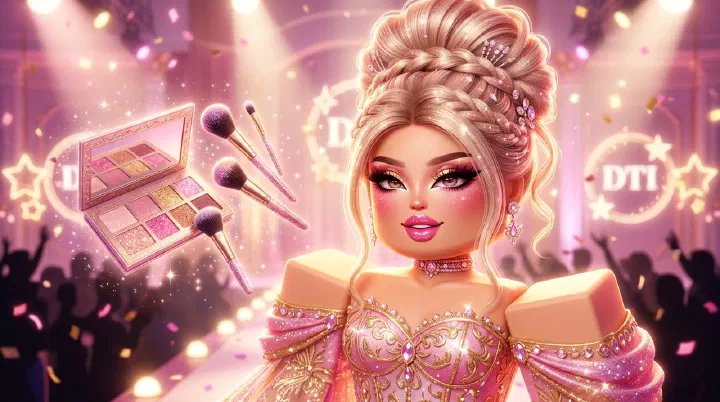
The Face That Fits Wins the Fit
The lobby timer hits 30 seconds. You’ve nailed your outfit — perfect layering, matching accessories, shoes that pop. Then the results screen shows 4 stars instead of 5. What happened?
Your face happened.
In Dress to Impress, custom makeup and hair aren’t decorative afterthoughts. They’re a second outfit — one that frames everything else you’ve built. A 5-star look with a mismatched face reads as incomplete, and the voting system reflects that. Players who consistently podium don’t just dress well; they paint well.
This guide covers every angle of DTI beauty decisions: how to pick makeup that amplifies your theme, hair strategies that maximize your visible outfit, color theory that makes judges linger, and the counter-intuitive tricks that separate podium regulars from the pack.
Why Makeup and Hair Matter More Than You Think
The 40% Visual Weight Rule
Your character’s head and hair occupy roughly 40% of the visible canvas in the voting screen. The outfit fills the rest. If that 40% doesn’t match your theme, you’re fighting an uphill battle no matter how good your layering is.
- Makeup without theme = minus 1-2 stars — A glam smoky eye on a “Sad” theme creates a visual contradiction that voters penalize instantly.
- Hair that hides your outfit = lost detail points — Long hair draping over your torso conceals necklaces, collars, and upper-body layering. Voters can’t reward what they can’t see.
- Matched full look = consistent 4-5 star range — When face, hair, and outfit sing the same song, each element reinforces the others. The whole becomes greater than the sum.
The 3 Factors That Determine Your Beauty Score
| Factor | Impact | What Judges Look For |
|---|---|---|
| Theme Alignment | High | Do your makeup colors and style match the theme’s mood? |
| Cohesion | Medium | Does your face feel like it belongs with your outfit? |
| Effort Signal | Medium-High | Custom details (blush, highlight, lashes) show intentionality |
Custom Makeup: Building Your Palette
Foundation and Skin Tone
Your base sets everything else. The rule is simple: skin tone should match your theme’s energy, not your real complexion.
- Light/pale base — For ethereal, angelic, winter, sad, ghostly themes. The palest shade reads as delicate or otherworldly.
- Warm/medium base — For beach, summer, casual, natural themes. Matches sunlight and approachability.
- Dark/deep base — For regal, powerful, evening, diva themes. Deep skin with warm undertones signals confidence and luxury.
- Grey/purple base — For zombie, vampire, cosmic, alien themes. Deliberately unnatural skin signals a fantasy character.
Pro tip: Never leave the default skin tone. Changing it alone — even subtly — signals to voters that you customized your face. That single click earns effort credit.
Eye Shadow: The High-Impact Zone
Eyes are the first thing voters see. Your eyeshadow choice does most of the heavy lifting for theme communication.
Theme-to-Shadow Reference
| Theme Type | Best Shadow Colors | Technique |
|---|---|---|
| Dark/Creepy | Black, dark grey, deep purple, blood red | Full lid coverage, heavy smudge lower lash |
| Ethereal/Fairy | Pastel pink, lavender, shimmer white, soft blue | Light wash, inner corner highlight, glitter |
| Glam/Formal | Gold, bronze, champagne, warm brown | Crease definition, outer V darkening, shimmer lid |
| Natural/Casual | Soft brown, peach, nude matte | Minimal wash, barely-there blending |
| Fantasy/Cosmic | Electric blue, silver, magenta, neon green | Graphic shapes, cut crease, bold lower lash |
| Romantic | Rose gold, dusty rose, soft plum | Diffused blending, gradient from lash to brow |
| Edgy/Alternative | Smokey grey, charcoal, olive green, mustard | Harsh lines, unblended patches (intentional) |
Blush and Contour
Most players skip blush. That’s a mistake. Blush fills the blank space on your character’s cheeks and adds life to the face.
- Dark themes — Skip blush or use the faintest cool-toned pink. Warm blush ruins a spooky look.
- Romantic themes — Heavy blush centered on the apples of the cheeks. Pair with a soft smile expression.
- Glam themes — Sculpted contour with blush placed high on cheekbones.
- Casual themes — Light peachy blush, diffused naturally across the cheek area.
Contour is subtle in DTI but worth applying for glam, formal, and villain looks. It changes the face shape perception, making your character look more chiseled.
Lip Color
Lips are your final exclamation point. They either confirm the theme or contradict it.
- Nude/pale — Natural, sad, ethereal, beach themes. Lets the eyes do the talking.
- Red — Glam, diva, formal, Valentine’s. Classic power move.
- Dark (black, burgundy, deep purple) — Villain, goth, vampire, rock. Committed and bold.
- Bright (pink, coral, orange) — Summer, playful, Y2K, pop star. High energy.
- Unnatural (blue, green, silver) — Alien, cosmic, futuristic, fantasy. Full commitment required.
Lashes and Brows
Eyelashes add drama and femininity. They’re almost always worth applying for glam, romantic, and formal themes. Skip them for natural, sad, or tough-girl themes.
Brows frame the face. DTI lets you adjust brow color and shape:
- Arched thin brows — Glam, diva, vintage
- Straight natural brows — Casual, natural, sporty
- Dark thick brows — Edgy, alternative, powerful
- No/minimal brows — Alien, ethereal, horror
Hair Selection Strategy
The Visibility Principle
This is the single most important hair rule in DTI: shorter hair scores higher on average because it shows more outfit.
When voters see your character in the runway or voting screen, long hair drapes over your torso, covering necklaces, collars, chest details, and upper body layering. These are often your most detailed, high-effort areas. Long hair hides them.
| Hair Length | Pros | Cons | Best For |
|---|---|---|---|
| Short (ear-length or above) | Max outfit visibility, modern look | Less dramatic silhouette | Glam, edgy, sporty, formal |
| Medium (chin to shoulder) | Good balance, still shows neckline | Can hide earrings | Most themes — the safe choice |
| Long (below shoulder) | Dramatic, romantic, fantasy-ready | Hides upper body details | Mermaid, boho, fantasy, historical |
| Up-do/Bun | Shows everything, elegant | Less hair to style | Formal, ballroom, office |
Hair Color Matching
Use this color logic framework rather than memorizing specific combos:
- Match hair to outfit’s dominant color. If your dress is emerald green, green or complementary (red-toned) hair creates cohesion. Don’t default to blonde or black.
- Consider the theme’s color palette. A “Neon Night” theme calls for bright pinks or electric blues in hair. A “Vintage” theme demands natural brunette, blonde, or silver.
- Use contrast deliberately. Light outfit + dark hair = striking. Dark outfit + light hair = ethereal. Same-color hair + outfit = flat.
- Ombre is a cheat code. Two-tone hair signals effort and lets you bridge two colors in your outfit. It almost never hurts.
Hairstyle Categories
- Sleek and straight — Glam, formal, villain, corporate. Signals polish and control.
- Wavy and voluminous — Boho, beach, romantic, natural. Signals softness and approachability.
- Curly and textured — Natural, summer, casual, retro. Adds personality and movement.
- Edgy cuts (pixie, undercut, asymmetrical) — Alternative, rock, punk, futuristic. Signals confidence and boldness.
- Fantasy styles (space buns, braids, long flowing) — Fairy, mermaid, goddess, cosmic. Max drama, high visual weight.
Note on hats and hair accessories: Headwear that covers your hair (wide-brim hats, hoods) lets you skip hair effort. But if you can see hair, it needs to be styled. Half-covered hair that’s poorly matched hurts more than no accessory.
Counter-Intuitive Truths About DTI Beauty
After hundreds of rounds and analyzing top-player strategies, these findings consistently surprise new players.
1. Skipping Makeup Entirely Can Win (When Done Deliberately)
A bare-faced look works for exactly two themes: “Natural/No-Makeup” and “Sad/Tired.” But the key is intentionality. If you choose bare skin, make sure the rest of your look screams “this was a choice.” Pair bare skin with deliberately messy hair, casual clothing, and slouched posture. Voters recognize the commitment. Doing bare skin with glam hair and a fancy dress reads as “ran out of time.”
2. The Worst Thing You Can Do Is In-Complete Makeup
Half-done makeup — lipstick with no eyeshadow, eyeshadow with no foundation, blush with nothing else — scores worse than no makeup at all. Incomplete makeup screams “I gave up halfway.” If you can’t finish a full face, go bare and let your outfit carry the round.
3. Hair That’s “Too Perfect” Hurts Casual Themes
For beach, pool party, gym, or sleepover themes, perfectly coiffed hair is a demerit. Slightly messy hair — flyaways, loosened texture, a lazy ponytail — fits the theme better than a red carpet updo. Players who switch to a “messy but styled” hair preset for casual themes consistently outscore those using the same perfect hair for every round.
4. Monochrome Face Beats Rainbow Face Every Time
New players often use every color in the palette — blue eyeshadow, pink blush, red lips, purple hair. This is visually chaotic. A disciplined monochrome or two-color face always reads more polished. Pick one color story (e.g., warm bronze family) and stick to it across eyes, cheeks, and lips. Add hair as a separate color story that complements rather than competes.
5. Eyelashes Are the Highest ROI Single Item
If you have time for only one custom makeup element, make it eyelashes. A full set of dramatic lashes instantly signals “custom face” to voters, even if the rest of the makeup is minimal. Lashes frame the eyes, make the character look more awake and expressive, and cover about 30% of the visible face area. No other single element delivers as much effort-per-second.
6. Darker Skin Tones With Bright Hair Create the Most Memorable Looks
The contrast between deep skin and vibrant hair (neon pink, electric blue, platinum white) generates the strongest visual impact in the voting feed. Voters remember these looks. This isn’t about realism — it’s about visual distinctiveness in a sea of similar outfits.
Theme-by-Theme Beauty Strategy
Dark Themes (Haunted, Villain, Vampire, Goth)
- Makeup: Pale or grey foundation, black or blood-red eyeshadow covering the entire lid, dark smudged lower lash line, dark lip (black, burgundy, or deep plum). Skip blush or use the faintest cool taupe contour.
- Hair: Black, dark purple, or silver-white. Sleek straight or wild messy — both work. Avoid soft waves or romantic curls.
- Why it works: The pale-dark contrast creates immediate visual impact. The face signals danger and drama before voters even register your outfit.
Glam Themes (Diva, Red Carpet, Formal, Ballroom)
- Makeup: Warm medium or deep foundation. Gold or bronze eyeshadow with a dark outer V contour. Heavy lashes. Red or deep nude lip. Sculpted cheekbone contour with highlight.
- Hair: Sleek, polished, and up or swept back. Show your neckline and earrings. Blonde, brunette, or silver — stick to natural hair colors.
- Why it works: Glam is about polish. Every makeup element should scream intentional luxury. The hair must not compete with the outfit — it frames it.
Whimsical Themes (Fairy, Mermaid, Fantasy, Cosmic)
- Makeup: This is your chance to go wild. Pastel or neon eyeshadows, glitter, graphic liner, unnatural lip colors (blue, pink, silver). Highlighter on cheekbones, nose bridge, and cupid’s bow.
- Hair: Fantasy colors — pastel pink, mermaid blue-green, silver. Space buns, braids, or flowing long hair with visible texture.
- Why it works: Fantasy themes reward creativity and bold choices. Subtlety is a weakness here. Go big or go home.
Casual Themes (Beach, Pool Party, Sleepover, Coffee Date)
- Makeup: Minimal. Light foundation or bare skin, soft brown or peach eyeshadow (or none), tinted lip balm or nude gloss, light blush. Skip false lashes.
- Hair: Messy but intentional. Loose waves, lazy ponytail, half-up style, or natural texture. Avoid sleek blowouts and elaborate updos.
- Why it works: Casual themes punish over-effort. The goal is “looks good without trying” — which ironically requires careful curation.
Romantic Themes (Valentine’s, Date Night, Wedding, Anniversary)
- Makeup: Rose gold, dusty pink, or soft plum eyeshadow. Diffuse blending with no harsh lines. Pink blush on the apples of the cheeks. Glossy pink or red lip. Soft lashes.
- Hair: Soft curls, romantic waves, gentle updo with tendrils. Warm hair colors — chestnut brown, honey blonde, rose gold.
- Why it works: Romantic themes need softness. Harsh lines, dark colors, or unnatural tones break the spell. Everything should look touchable and gentle.
Edgy Themes (Punk, Rock, Grunge, Alternative)
- Makeup: Heavy smudged liner, dark eyeshadow, pale or natural foundation, dark lip (black or deep red). Imperfect blending reads as intentional. Skip gloss — matte everything.
- Hair: Edgy cuts — pixie, undercut, asymmetrical bob. Unnatural colors work well (neon green, electric blue, fire red). Messy texture.
- Why it works: Edgy themes reward rebellion against polish. The face should look like it doesn’t care about conventional beauty standards.
Step-by-Step: Building a Winning Face in 60 Seconds
When the timer is tight, follow this priority order:
- Foundation (5 seconds) — Match to theme energy, not reality.
- Eyeshadow (15 seconds) — One color wash across the lid is enough. Don’t try complex blending under pressure.
- Lashes (5 seconds) — Highest ROI element. Just add them.
- Lip color (5 seconds) — Pick one that matches your eye story.
- Blush (5 seconds) — Adds life to the face, takes seconds.
- Hair style (10 seconds) — Prioritize visibility over length for most themes.
- Hair color (10 seconds) — Match to outfit dominant color or theme palette.
- Brows (5 seconds) — Subtle adjustment, but worth it.
Total: 60 seconds for a complete, theme-aligned face. Practice this sequence until it’s muscle memory.
Advanced Techniques
The Two-Face Strategy
For themes that blend two moods (e.g., “Sad Clown,” “Dark Fairy,” “Angel Devil”), split your makeup down the middle. One eye with dark/sad makeup, the other with bright/happy. One cheek blushed, the other pale. This signals high skill and theme understanding. It reliably earns bonus votes from players who notice the detail.
Color Theory Cheat Sheet
- Complementary pairs (opposite on color wheel): Blue-orange, red-green, purple-yellow. Use one for eyes, the other for lips or hair.
- Analogous pairs (next to each other): Blue-purple, red-orange, green-yellow. Use for cohesive monochrome looks.
- Triadic (evenly spaced): Red-yellow-blue. Use for maximalist, colorful themes.
Seasonal Event Makeup
During DTI seasonal events (Halloween, Christmas, Valentine’s, Summer), unique makeup items rotate through the shop. These items are limited-time and often score higher because they’re rare. Prioritize collecting:
- Halloween: Dark lips, blood effects, pale foundations
- Christmas: Frosty blues, shimmer whites, red lips
- Valentine’s: Heart accents, pinks, glosses
- Summer: Bronzers, bright colors, glitters
Frequently Asked Questions
Q: Can I save custom makeup presets in Dress to Impress? A: Yes — the game supports preset slots. Save a neutral face, a glam face, a dark face, and a fantasy face. This cuts your prep time to under 30 seconds per round.
Q: What makeup works for the “Theme” theme (the default/mystery theme)? A: Neutral safe face — natural foundation, soft brown eyeshadow, nude lip, light blush, medium lashes. Brown or black hair in a medium-length style. This covers the widest range of possible themes.
Q: Does hair color affect my score more than hair style? A: Hair style has slightly more impact because it affects outfit visibility. But color is a close second — a great style with the wrong color costs at least 1 star.
Q: How do I make my character look older/more mature in DTI? A: Use deeper contour, darker eyeshadow in the crease, thinner brows, and a darker lip. Sleek, pulled-back hair also reads as more mature compared to loose, youthful styles.
Q: Should I always match my makeup color to my outfit color? A: No. Match the mood of your makeup to the mood of your theme. Your outfit provides the color palette, but makeup can introduce contrast or accent colors. A gold dress with purple eyeshadow (complementary colors) is more interesting than gold-on-gold.
Q: Is “no makeup” ever the right choice? A: Only for Natural, Sad, Tired/Insomniac, or Sleepover themes — and even then, make it look deliberate. Pair bare skin with messy hair and casual clothing so voters read it as intentional.
Q: How much time should I spend on makeup vs. outfit? A: 70% outfit, 30% face — but the face percentage increases to 40% for glam and fantasy themes where beauty is central to the concept.
Q: Do hats or glasses reduce the importance of makeup? A: Partially. Hats that cover hair reduce hair importance but not makeup — your visible face still needs to match the theme. Large sunglasses can cover eyeshadow but your lips and skin still communicate theme.
Final Checklist Before Hitting “Ready”
- Foundation matches theme energy (pale for dark, warm for casual, deep for glam)
- Eyeshadow colors align with theme category
- Lashes applied (unless theme calls for natural)
- Lip color confirms the theme mood
- Blush adds life without contradicting the vibe
- Hair style maximizes outfit visibility
- Hair color complements outfit’s dominant color
- Brows frame the face appropriately
- Full face feels cohesive (one color story, not a rainbow)
- Hair and makeup together match the theme before you even see the outfit
Custom makeup and hair are the difference between a good outfit and a winning look. Master them, and you’ll never wonder why a perfect dress got 3 stars again.