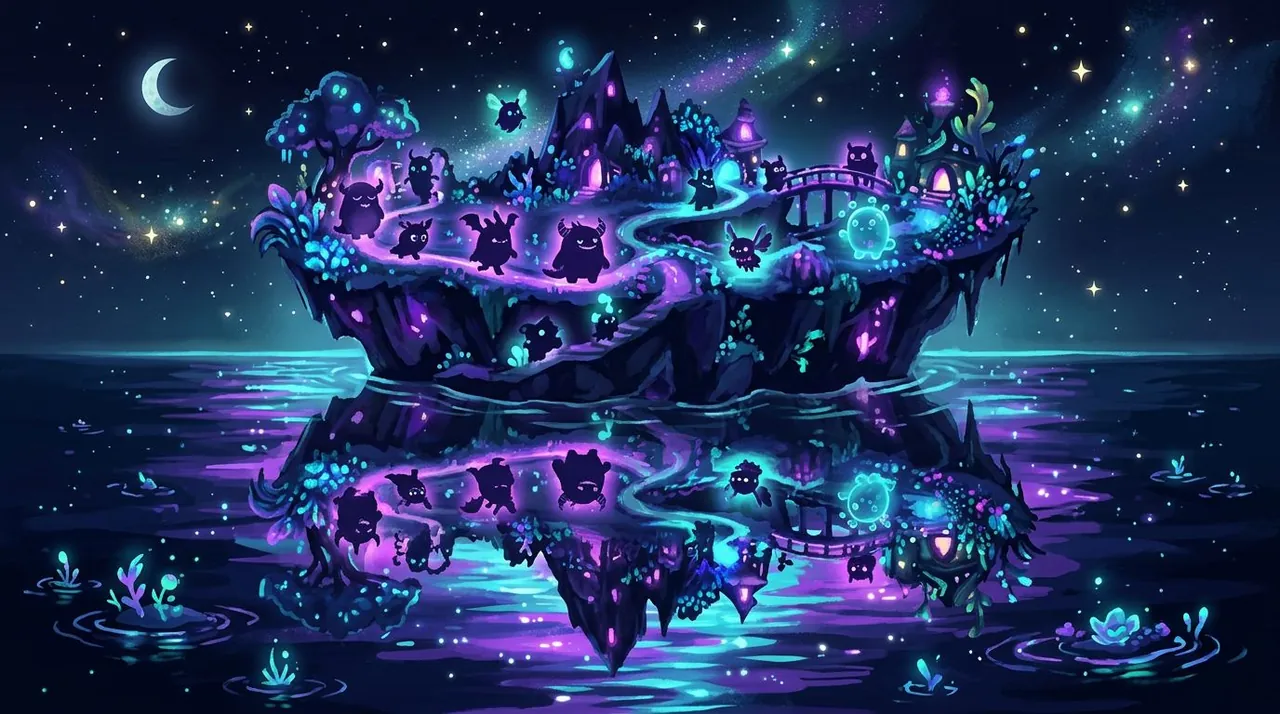
Last updated: August 29, 2026. This guide covers what Mirror Islands are, when they unlock, and how to use them as a passive Shard farm.
You Hit Level 20, the “Mirror” Button Appears, and You’re Not Sure It’s Worth a Click
You’re sitting at roughly level 20, and your natural islands are finally humming. Plant Island is stacked with Entbrats, your coin total climbs on its own while you’re asleep, and the game suddenly drops something new on the map: a row of islands with a dark, sunset tint. You tap one. Mirror Plant Island. It looks like the island you’ve farmed for weeks, except the grass is dim and the whole place is cast in twilight.
Then the shop opens and asks if you want to buy monsters. Not breed them. Buy them, with coins.
You close it. It looks like a cosmetic reskin, and cosmetics don’t pay the bills. A darker Plant Island with cheaper-sounding monsters? You’ve got coin farms to feed and a breeding guide to work through. You file Mirror Islands under “later, probably never.”
That’s the mistake most players make. Mirror Islands aren’t a cosmetic toggle — they’re one of the cheapest, most passive Shard sources in the mid-game, and skipping them quietly makes your Tribal Island and Ethereal goals more expensive.
What Mirror Islands Actually Are
Mirror Islands are alternate, darkened versions of the game’s natural islands. Where your normal Plant Island is bright and green, Mirror Plant Island is a dusk-colored copy with the same layout, the same bed mechanics, and the same song structure — but a different mood.
The monsters on them are “mirrored” versions of the originals. A mirrored Mammott is still a Mammott, but its colors are flipped or muted, and its sound sits a touch lower in the mix. Same creature, different skin and voice. That’s the cosmetic layer, and it’s the part players see first.
What matters is the layer underneath. Mirrored monsters produce Shards instead of coins, and you don’t have to breed them to get them. You buy them straight from the Market on the mirror island with coins, place them, and they start earning Shards. It’s a coin-to-Shard exchange that keeps paying out forever.
The islands themselves are stripped-down compared to your mains. There’s no breeding structure, no nursery, no bakery. You can’t hatch anything there, and you can’t cook treats there. You place monsters, you place decorations, and you upgrade the castle for more beds. That’s the whole island. The simplicity is the point — it’s a storage and Shard rack, not a full farm.
When Mirror Islands Unlock, and What You See First
The first Mirror Island is commonly cited as unlocking around player level 20, and it’s usually Mirror Plant Island that leads the list. From there, more mirror islands unlock as you level, with the Fire and Magical mirror islands arriving much later and costing far more to populate.
You’ll find them from the map or the island navigation, usually marked with a mirrored or darker icon next to their natural counterpart. Tapping one takes you to the island; tapping the Market there shows you what’s for sale. The unlock itself is the level gate. After that, the real cost is the monsters, not the land.
The order you’ll likely see them in mirrors the natural island order: Plant, Cold, Air, Water, Earth. Each works the same way — same shop mechanic, same “buy and place” loop — and sells the roster of its matching natural island.
If you want the full unlock sequence for the natural islands themselves, our island unlock order guide covers that ladder from start to finish.
What Mirrored Monsters Actually Do
A mirrored monster does three things for you, and only one of them is obvious.
First, it produces Shards. The rate depends on the monster — bigger, higher-element monsters earn more Shards per hour, and leveling a mirrored monster raises its output the same way leveling raises coin output on a natural island. This is the whole reason to care.
Second, it holds a spot on the island without touching your main islands. Every mirrored monster you buy lives on the mirror island, so you don’t have to evict a coin-earner from Plant Island to make room. Your main islands stay pure coin farms, and the mirror island becomes a separate, dedicated Shard rack.
Third, it rounds out the island’s song in its own lower register. Nice, but not a reason to spend coins by itself.
One thing a mirrored monster does not do is breed. You can’t combine them, you can’t hatch them, and there’s no nursery to hold eggs. If you’re deep in the breeding guide right now, park that part of the game — Mirror Islands run on a completely different loop. You buy, you place, you level, you collect Shards. That’s it.
Why Mirror Islands Matter: The Shard Economy
Shards are the quiet second currency that gates a lot of the late and mid game. They fund Tribal Island feeding, which is a recurring weekly sink for any player in a tribe. They’re the currency of Ethereal Island, where Ethereal monsters produce more Shards than anything else but also cost Shards to teleport and to buy. And they feed into Wublins, Celestials, and other endgame systems that don’t run on coins at all.
Here’s the problem for a mid-game player: Shards are hard to come by early. Ethereal Island is the best source, but getting your first Ghazt bred and teleported is a long, luck-heavy grind. Wublin Island pays out, but waking Wublins means zapping eggs, which means burning breeding time and beds. Most players hit a wall where they need Shards but have no clean way to generate them.
Mirror Islands are the cheap answer to that wall. You already have coins — your natural islands are making them constantly. Mirror Islands let you trade a slice of that coin income for a permanent Shard drip, with zero breeding luck involved. You buy a handful of mirrored commons, and from that day on, Shards trickle in whether you’re online or not.
That drip looks small next to a level-15 Ethereal, and it is. But it’s passive and guaranteed, and it compounds into a Tribal feeding or a teleport chunk you didn’t have to wait on. For most mid-game players, that’s the difference between using Shard systems and sitting them out.
How to Set Up a Mirror Island Without Going Broke
The fastest way to waste Mirror Islands is to treat them like a main island and buy the biggest thing in the shop first. Don’t. Here’s the order that works.
Start with the cheapest mirrored single-element monsters you can buy. On Mirror Plant Island, that means a few low-tier commons. They cost the least, they place instantly, and they start producing Shards the moment they’re down. You want volume first, not quality.
Next, level them a bit. Leveling costs treats, and treats come from your main island bakeries, so budget a small slice of your food output. A leveled mirrored common earns more Shards per hour than an unleveled one, and the first few levels are cheap. Our monster feeding and food guide covers how to keep the bakery stocked without starving your coin farms.
Then, and only then, add bigger mirrored monsters. A mirrored quad earns far more Shards per hour, but it costs a pile of coins, and dumping that much coin into one monster too early stalls the very farms that fund everything else. Wait until your daily coin income can absorb the hit without you noticing.
Finally, spread out across islands as you unlock them. Each new mirror island is another Market with another cheap starter tier, which means another wave of cheap Shard drip for a small coin outlay. The goal is lots of small producers across several islands, not one expensive monster on one island.
For the coin side of this, see our coin economy optimization guide — it’s the same discipline, just aimed at the currency you’re spending here instead of the one you’re earning.
Where I Went Wrong: Buying the Expensive Mirror Monsters First
I’ll tell you the failure straight, because it’s the exact trap Mirror Islands set.
The error: the moment I unlocked my first mirror island, I walked into the Market, saw the big mirrored monsters with their big Shard-per-hour numbers, and bought the most expensive thing I could afford. I drained most of my coins on one fancy mirrored quad and placed it proudly.
What actually happened: my Shard drip barely moved. One monster, even a quad, produces a small stream. Meanwhile my coin total cratered, which meant I couldn’t afford the next bakery upgrade, which meant my food stalled, which meant I couldn’t level my coin-earning monsters on schedule. For about a week, my whole account felt stuck, and the mirror island had caused it.
The cause wasn’t the mirror island. It was my read on it. I judged the purchase by Shards-per-hour alone and ignored the cost side — both the coins I spent and the coin income I slowed down. I’d spent my way out of future growth for a small present-day drip.
The recovery: I stopped buying anything new on the mirror island, pushed coins back into my natural farms and bakery until income recovered, then started over the correct way — cheap commons first, level them, add bigger monsters only after my daily coins could absorb it. The mirror island went from a regret to a reliable little Shard engine, but only once I bought in the right order.
If-Then: Should You Build Mirror Islands Right Now?
| If… | Then… |
|---|---|
| You’re below the unlock level (roughly level 20) | Focus on coin farms and your natural island ladder. Mirror Islands aren’t open yet, and there’s nothing to buy. |
| You just unlocked and have spare coins | Buy a few cheap mirrored commons now. Small cost, instant Shard drip, no downside. |
| You’re short on coins, under 100k or so | Wait. Don’t touch Mirror Islands until your coin income has room. The coin farms pay for everything. |
| You need Shards for Tribal Island or Ethereal Island | Build Mirror Islands now. They’re the cheapest guaranteed Shard source you have access to. |
| Your main islands are full and you want extra monster space | Buy mirrored copies and park them here. It’s extra beds without evicting a coin-earner. |
| You already have a strong Ethereal Island | Skip the cheap mirrored commons and go straight for bigger mirrored monsters, or skip Mirror Islands entirely. Ethereal output dwarfs them. |
The short version: Mirror Islands are a mid-game bridge into the Shard economy. Early, they’re free value. Late, they’re optional. Only in that middle stretch are they genuinely important.
The Counterintuitive Part: It’s Not a Coin Farm, and the Cheap Monsters Win
Here’s the thing every first-timer gets backwards. Mirror Islands look like more farms, so people build them like farms — chasing the biggest per-unit numbers. But the per-unit Shard rate is the wrong scoreboard.
The right scoreboard is Shards per coin. A mirrored quad produces more Shards per hour than a mirrored common, sure — but it costs dozens or hundreds of times as many coins. Per coin spent, the cheap commons almost always win. You get more total Shard drip for your coin by buying ten commons than by buying one quad.
The second thing people get backwards is what the island is for at all. It’s not a coin farm. It’s the opposite of a coin farm: you spend coins here, you earn Shards. If you judge Mirror Islands by how much coin they make you, they look terrible, because they make zero coin. If you judge them by Shards, they’re a bargain. Most of the “Mirror Islands are useless” takes online come from people grading them on the wrong currency.
So the counterintuitive play: buy cheap mirrored commons, skip the shiny quads until you’re rich, and stop expecting coins from an island built to convert them. Treat it as a slow Shard generator you fund with spare change, and it stops feeling useless.
FAQ
What level do Mirror Islands unlock in My Singing Monsters?
The first Mirror Island is commonly cited as unlocking around player level 20, with later mirror islands opening at higher levels. Treat the exact level as approximate and check in-game, since the game has added new mirror islands over time and shifted unlock thresholds between updates.
Do mirrored monsters produce coins or Shards?
Mirrored monsters produce Shards, not coins. You buy them with coins on the Mirror Island, and they pay you back in Shards over time. That makes Mirror Islands a coin-to-Shard converter — useful for funding Tribal Island feeding, Ethereal Island, and other Shard sinks.
Can you breed on Mirror Islands?
No. Mirror Islands don’t have breeding structures, nurseries, or bakeries. You can’t breed or hatch anything there. You populate them by buying monsters directly from the Market with coins, then level them up with treats you bake on your main islands.
Are Mirror Islands worth it, or are they just a cosmetic reskin?
They’re worth it for Shard income, not for looks. The darker theme and altered monster sounds are cosmetic, but the Shard production is real and passive. A few cheap mirrored monsters running in the background is one of the lowest-effort Shard sources in the mid-game.
Which mirrored monsters should I buy first?
Start with the cheapest single-element and double-element mirrored monsters, not the expensive quads. Small monsters cost little and still drip Shards, so you can start earning without wrecking your coin balance. Add bigger mirrored monsters later once your coin economy can absorb the cost.
Related Guides
- Beginner Guide – Getting started in MSM
- Island Unlock Order Guide – The full island ladder
- Ethereal Island Guide – The strongest Shard source in the game
- Wublin Island Guide – Another passive Shard generator
- Coin Economy Optimization Guide – Fund your mirror purchases
- Farming Guide – Coin, diamond, and Shard optimization