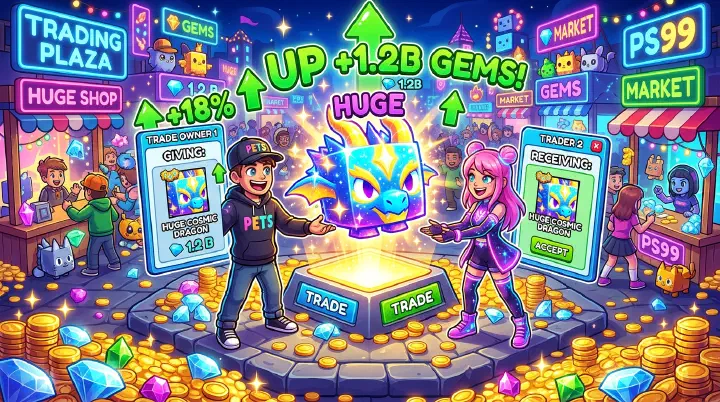
You buy the Huge pet for 50M gems because the booth owner wants fast diamonds before the weekend update. It feels risky. The plaza chat is full of people screaming that prices are dead, half the booths are undercutting each other, and your friend says you should have waited. Two weeks later, the same pet is selling near 200M because the egg disappeared, supply froze, and everyone who panic-sold wants back in. The player who sold it to you is now in your DMs asking if you will take 120M.
That is the entire Pet Simulator 99 exclusive pet market in one trade: fear, timing, supply, hype, and a lot of players who only check value after they already lost value.
Exclusive pets are not just collectibles. In PS99, they act like tradeable assets. Some bleed gems every update. Some sit flat for months. Some spike hard when an event ends, a YouTuber shows them off, or the market remembers that nobody can hatch them anymore. The difference between profit and regret is rarely luck. It is usually whether you understood why the pet had value before you bought it.
This guide focuses on investing in exclusive pets for profit: which types tend to hold value, how to read RAP without getting tricked, when to buy, when to sell, how to trade up, and how to avoid scam deals or shark trades that look fair for about five seconds.
Exclusive Pets as Investments: What You Are Really Buying
When you buy an exclusive pet, you are not only buying damage or looks. You are buying a position in the PS99 economy. That position has three parts:
- Demand — how many players want the pet right now.
- Supply — how many copies exist and how many are actually for sale.
- Story — why players care about it: event history, appearance, rarity, flex value, or nostalgia.
A plain pet with strong stats can lose value fast when a better pet appears. A discontinued Huge with a clean design can keep demand even when it is no longer useful for progression. That is why the best investment pets are usually not the newest stat pets. They are pets with limited supply and lasting desirability.
Think of every purchase as a bet on future attention. Will players still want this pet after the event ends? Will it look good in a booth? Is it recognizable? Is it tied to a seasonal moment people remember? Does it have a low existence count compared with similar pets?
If the answer is yes, you may be looking at an investment. If the only reason to buy is “everyone is talking about it today,” you may be standing at the top of the hype candle.
Which Exclusive Pets Usually Hold Value?
No pet is guaranteed to rise forever. PS99 updates too quickly for that. But some categories are much safer than others.
| Pet Type | Investment Strength | Why It Holds Value |
|---|---|---|
| Older discontinued Huges | High | Supply is fixed, collectors still want them, and fewer owners list them cheaply. |
| Limited event exclusives | High | Once the event ends, new supply stops and late buyers chase them. |
| Unique visual designs | Medium-High | Pets that stand out are easier to resell than forgettable copies. |
| New update exclusives | Medium | Can rise later, but often dump first as early sellers race for gems. |
| Common booth-flipped exclusives | Low-Medium | Good for short trades, weaker for long holds if supply is heavy. |
| Overhyped fresh pets | Risky | Prices can collapse when launch excitement fades. |
The safest long-term pattern is simple: limited supply plus lasting demand. A pet does not need to be the rarest in the game. It needs to be rare enough that sellers cannot flood the market every time price rises.
Older Huges often perform well because time removes weak hands. Players quit, lock pets into collections, or stop caring about small price moves. That reduces active supply. When a buyer wants that specific pet later, they may have to overpay because only a few are listed.
Limited event pets can also appreciate, especially after the first panic phase. During an event, everyone is hatching, selling, and trying to liquidate. Prices often feel weak. After the event ends, supply stops. A week or two later, players who skipped the event start buying, and the pet can recover.
New exclusives are the trickiest. Some become great investments, but not always immediately. The first few days are often a trap because sellers want to cash out while the pet is hot. If you buy too early, you may pay for hype instead of scarcity.
Market Timing: When to Buy and When to Sell
The best pet investors in Pet Simulator 99 do not only ask, “Is this pet good?” They ask, “Is this the right moment to own it?”
Best times to buy
Buy during panic, not celebration. When a new update is coming, players often sell older pets to raise gems. This can push good pets below fair value for a short window. If the pet still has strong long-term demand, that dip can be a buying opportunity.
Buy near the end of an event, but not during the final hype spike. Event pets can be cheap when supply is still flowing. However, prices may jump in the last hours when everyone realizes the egg is leaving. The better move is often buying during the middle-to-late grind period, when bored hatchers are undercutting each other.
Buy during off-hours. Late night or low-population trading sessions can create lazy pricing. Booth owners may underprice because fewer buyers are online. You will not find a steal every server, but you only need one good listing to make the search worth it.
Best times to sell
Sell into demand, not silence. Weekends, US evenings, and update days bring more buyers. More buyers means more emotional purchases, more booth traffic, and a better chance someone pays above RAP.
Sell before major updates if your pet is vulnerable. If a new exclusive egg, Huge chance, or major event is about to drop, many players liquidate to chase the new thing. Even strong pets can dip temporarily. If you are holding a pet with weak demand, selling before the update can protect your gems.
Sell when your reason for buying has played out. If you bought because the event was ending and the pet already spiked, do not get greedy without a new reason. Profit is only real after you convert it back into gems or a stronger asset.
Trading for Profit Without Gambling Your Bank
Pet investing becomes dangerous when every trade uses your whole gem stack. You need room to make mistakes. Even good buyers misread the market sometimes.
A safer trading plan looks like this:
- Keep liquid gems. Do not spend 100% of your diamonds on one pet unless you are ready to hold through a crash.
- Start with pets that move. A pet with steady booth demand is easier to flip than an obscure rare pet that only one collector wants.
- Aim for small edges. A 5-15% profit repeated often is better than waiting forever for a miracle double.
- Use upgrades carefully. Trading several weaker pets for one stronger pet can be good, but only if the stronger pet has cleaner demand.
- Track your entry price. If you forget what you paid, you will lie to yourself about profit.
A good flip is not always a giant underpay. Sometimes it is buying at 92M when the pet reliably sells at 105M during peak hours. After tax, time, and negotiation, the profit may be smaller than it looks, but it is repeatable. Repeatable beats lucky.
For bigger holds, write down your thesis in one sentence before buying:
“I am buying this event Huge because supply ends this weekend, RAP is flattening after the dump, and the design has collector appeal.”
If you cannot explain the purchase that clearly, you may not be investing. You may just be reacting to plaza noise.
Failure Analysis: Why Players Lose Gems on Exclusive Pets
Most bad pet investments fail before the trade window even opens. The mistake is not the pet. It is the thinking.
Buying at peak hype
The easiest way to lose gems is buying a newly released exclusive when everyone is screaming about it. Early prices often include excitement, rarity confusion, and fear of missing out. Then more copies enter the market, sellers undercut, and the price slides. The pet might be good long term, but your entry was bad.
If a pet has already doubled because of a trend, ask who is left to buy above you. If the answer is “people even more desperate than me,” be careful.
Not checking RAP trends
A single RAP number is not enough. You need direction. A pet at 100M with rising RAP is different from a pet at 100M with falling RAP. The first may have buyers stepping in. The second may be a falling knife.
Look for patterns:
- Is RAP rising slowly over several days?
- Did RAP spike once and immediately fade?
- Are booths listing below RAP because sellers cannot find buyers?
- Are buyers offering above RAP in chat or direct trades?
RAP can be manipulated, especially on thinly traded pets. Use it as a signal, not a command.
Ignoring update cycles
Updates move gems. Before new content, players sell. During events, new supply floods in. After events, supply stops. After balance changes or new eggs, attention shifts again.
A pet can be a good investment but a bad buy one day before a huge market-wide selloff. Timing does not need to be perfect, but you should know what update pressure you are buying into.
Confusing rarity with liquidity
Some pets are rare but hard to sell. That matters. If only collectors care, you may need days to find the right buyer. Meanwhile your gems are locked. A slightly less rare pet with constant demand may make more profit because you can sell it quickly and redeploy gems.
Rare is good. Rare and wanted is better.
Accepting shark deals because the total value looks close
A shark trade is not always an obvious scam. It can be a bundle of hard-to-sell pets offered for your clean, liquid Huge. The values may look equal on paper, but you inherit the problem: now you must sell five slow pets instead of one fast pet.
When someone offers many items for one strong pet, ask for extra value. Liquidity has a price.
Decision Framework: Should You Buy This Exclusive Pet?
Use this checklist before any serious investment. If a pet fails too many points, skip it. There will always be another trade.
1. RAP history
Check more than the current number. You want to know the slope.
- Bullish: steady climb, higher lows, listings near or above RAP.
- Neutral: flat RAP, normal volume, no heavy undercutting.
- Bearish: sharp drop, many booths below RAP, sellers chasing buyers.
A pet does not need a perfect chart, but you should avoid buying just because it is “down a lot.” Cheap can become cheaper.
2. Supply scarcity
Ask how many copies exist and whether more can enter the game. Fixed supply is stronger than ongoing supply. A discontinued event pet has a clearer ceiling on supply than a pet still being hatched.
Also think about active supply. A pet with 20,000 copies can still rise if only a few owners sell. A pet with 5,000 copies can dump if many owners are flippers rushing to exit.
3. Update relevance
Does the pet benefit from the current game cycle? Event pets can rise after events. New meta pets can rise during progression pushes. Older collectibles may rise during quiet periods when players browse for flex pieces.
If an update is about to introduce a similar but cooler pet, your target may lose attention. Similar designs compete with each other.
4. Visual and collector appeal
Looks matter in PS99. A pet that players instantly recognize is easier to resell. Clean colors, seasonal identity, meme value, and strong animations can all support demand. Ugly rare pets can still be valuable, but they rely more on collector scarcity than broad buyer interest.
5. Liquidity
Before buying, search booths and chat. Are people actually buying this pet? Are listings stale? Do sellers instantly drop price when asked? The best investment is not only the one that rises. It is the one you can exit when your plan says exit.
6. Margin of safety
Do not buy at the exact price where everything must go right. Try to enter below fair value, during dips, or with a bundle discount. Your profit is often made when you buy, not when you sell.
Counter-Intuitive Tips That Actually Make Gems
Sometimes selling during a dip is correct
This sounds wrong. If prices are down, why sell? Because the first dip is not always the bottom. When an update triggers panic, early sellers may only be the beginning. If you hold a weak pet and see market-wide fear building, selling at a small loss can free gems to buy back lower later.
The mistake is treating every dip as a buying opportunity. Strong pets recover. Weak pets get repriced.
Do not always chase the rarest version
Rainbow, Shiny, and special variants can be amazing, but they are not always the best investment for smaller players. The buyer pool is thinner. A normal Huge with heavy demand may flip faster than a rare variant that requires a collector. If your goal is profit, liquidity can beat prestige.
Boring pets can outperform flashy new ones
A stable older exclusive that nobody is hyping may quietly rise while the new release swings up and down. Boring markets are where patient buyers get good entries. Hype markets are where impatient buyers pay someone else’s exit price.
Overpaying can be fine if you are upgrading liquidity
If you trade several slow pets plus a small overpay for one high-demand Huge, you may improve your position. On a value list, it looks like a loss. In practice, you moved from clutter into a cleaner asset. That can help you sell faster and make better future trades.
Cash is a position
Holding gems feels unproductive when everyone else is flexing pets. But gems give you optionality. When panic hits, the player with liquid gems gets to choose. The player fully invested has to watch.
Avoiding Scams, Manipulation, and Shark Deals
Investment profit disappears fast if you get tricked. Treat every trade like the other person has a reason for offering it.
Watch for these red flags:
- Rushed trade windows. Scammers want speed. Slow down and recheck every item.
- Variant swaps. Make sure the pet is the exact version you agreed on: Normal, Golden, Rainbow, Shiny, or signed.
- Fake urgency. “Accept now or I leave” is usually pressure, not opportunity.
- Manipulated RAP. Thin-market pets can show inflated RAP after a few unusual trades.
- Bundle fog. Many small items can hide weak liquidity or declining values.
- Trust trades and middleman claims. Use official trade systems and avoid anything that requires faith.
For shark deals, focus on exit difficulty. If someone offers you five pets worth 20M each for your one pet worth 100M, that is not automatically fair. Your pet may sell in ten minutes. Their bundle may take three days and multiple discounts. Ask for a premium or decline.
Also be careful with signed pets. A signature can add value if the signer is famous and buyers care. It can add nothing if nobody recognizes the name. Do not pay a huge premium unless you know the market for that signature.
A Simple Investment Plan for Different Budgets
If you are starting small, do not try to copy billion-gem traders. Your best edge is speed, patience, and clean buying.
Under 100M gems: Focus on quick flips, underpriced exclusives, and liquid pets. Avoid tying your whole stack into one slow collectible.
100M-1B gems: Mix short flips with one or two medium-term holds. Start watching event endings and update cycles. Keep at least 20-30% liquid.
1B+ gems: You can hold older Huges, rare variants, and collector pets, but you still need liquidity. Bigger players lose gems by becoming too proud to sell a bad position.
No matter your budget, track three numbers: entry price, target sell price, and stop-loss price. The stop-loss does not need to be strict like a real stock trade, but you should know when your thesis is broken. If the event ended, supply froze, and the pet still keeps falling with no buyers, something is wrong.
FAQ
What is RAP and why does it matter for pet investing?
RAP means Recent Auction Price. It shows the average price a pet has recently sold for, which makes it the closest thing PS99 has to a market price. Use RAP to avoid obvious overpays, but always check the trend behind the number. Rising RAP, healthy booth demand, and few undercuts are stronger than one isolated high value.
Which exclusive pets appreciate the most in value?
Limited-time event exclusives, older discontinued Huges, and pets with strong visual identity usually have the best appreciation potential. The ideal investment has fixed supply, recognizable design, and enough demand that buyers still care months later. The worst investments are usually common new pets bought during launch hype.
When is the best time to sell exclusive pets?
Sell when buyers are active and attention is high: weekends, US evening hours, or after a pet has just completed the price move you expected. Consider selling before major updates if your pet may be dumped for new content. Do not wait for a perfect top. A clean profit today often beats a greedy listing that sits until the market rolls over.