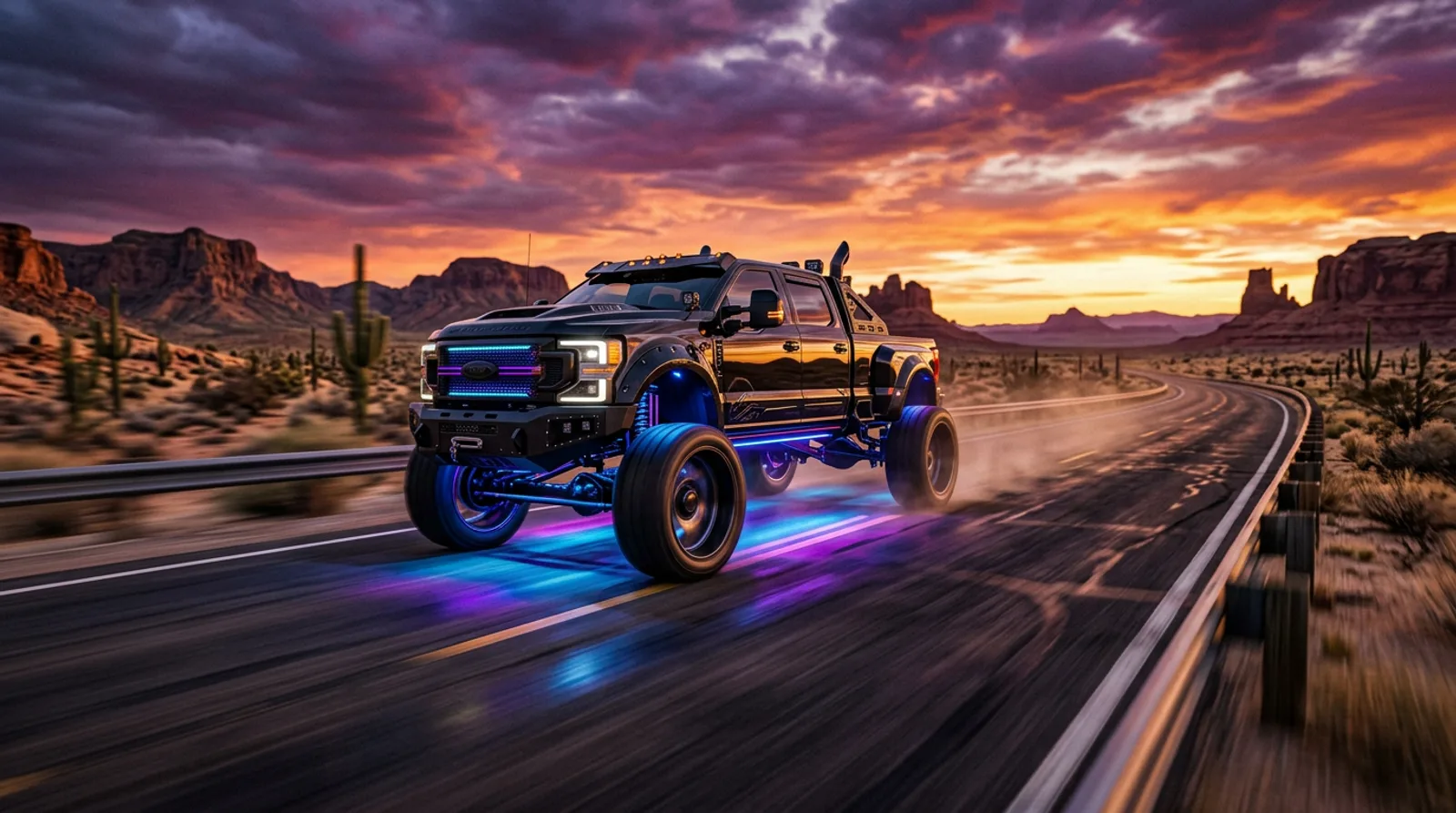
You load into Vehicle Simulator for the first time. You spawn in a parking garage with a dozen starter cars. You pick the cheapest sedan. You pull out of the garage and into a city that is huge — huge in a way that feels different from the rest of Roblox. There are highways with on-ramps, intersections with traffic lights, mountains with switchbacks, an airstrip, a marina. You drive for ten minutes and you do not see another player. You keep driving. You find a mountain road that does not appear on the map. You turn around, find a tunnel that goes under the city, and you realize this game is not about racing. It is about driving.
Then a friend pings you. “Try Driving Empire.” You load in. You spawn in a city that is smaller than Vehicle Simulator’s, but the city has jobs — taxi driver, police officer, trucker. You take a taxi job. You pick up a passenger. You drive them across the city in 4 minutes. You earn $200. You realize this game is not about the road. It is about the city.
Then a different friend pings you. “Try Greenville.” You load in. You spawn on a quiet residential street. There are no jobs. There are no races. There are no objectives. There is just a small town, a few cars, and a community of players who drive around talking to each other. You drive to the gas station. You fill up. You drive to the diner. You realize this game is not about doing anything. It is about being somewhere.
That gap — between the driving sim you thought you were playing and the one that actually exists at the deeper tiers — is what every “best Roblox driving games” list skips. These lists put Vehicle Simulator at #1 because it has the most cars and never tell you what each game is actually asking of you by the time you have 100 hours in.
So this guide does the opposite. Six games, ranked, with the thing that actually matters for each one: what the driving is like after the starter car is obsolete.
Why Most “Best Roblox Driving Games” Lists Mislead You
Three problems with the lists that already exist.
They rank games by vehicle count, not driving feel. A list that puts Vehicle Simulator at the top because it has 300 cars tells you nothing about whether the driving physics are satisfying, whether the map is interesting to cruise, or whether the social driving scene is alive. The driving sim genre lives or dies on the moment-to-moment feel of the wheel, and that is the least-measured factor.
They confuse graphics with depth. A photorealistic car on a flat map is a worse driving sim than a stylized car on a layered map with traffic, jobs, weather, and other drivers. The depth of a driving sim is in the world that surrounds the car — the city, the highway, the mountain, the marina — not in the polygon count of the vehicle.
They ignore the social driving layer. Driving is a social genre. You are cruising with friends, you are joining car meets, you are running taxi jobs with passengers, you are racing on weekends. A driving sim with the wrong community feels empty, and a driving sim with the wrong other drivers feels toxic. Community, car-meet culture, and the social layer are part of the genre.
How We Evaluate Roblox Vehicle Driving Sim Games
Six factors, weighted. Same framework I use across every genre ranking on this site, because the question is the same everywhere: figure out what the game actually asks of you, not what its store page claims.
1. Vehicle variety and depth (25%). How many vehicles does the game have, and how distinct are they? A game with 50 cars that all drive the same is shallower than a game with 20 cars that each have a different handling profile. The depth is in the differentiation, not the count.
2. Map scale and detail (20%). How big is the map, and how much is there to do in it? A flat track with one road has low replay value. A city with highways, off-road trails, mountains, an airstrip, and a marina has high replay value.
3. Driving physics and realism (15%). How good does the car feel to drive? Is the handling arcade or sim? Does the game reward smooth inputs or button-mashing? The single most predictive factor of whether you will still be playing in a month.
4. Community and social driving (15%). How active is the community? Are there car meets? Are there cruise crews? Are there roleplay servers? The social driving scene is part of the genre, and a dead scene makes any driving sim worse.
5. Progression fairness (10%). Can a free player reach the best vehicles, or does the unlock system push you toward spending? Are the meta vehicles earnable, or are they Robux-locked?
6. Game mode variety (10%). Beyond the default mode, what else is there? Racing, jobs, roleplay, stunts, drag, free roam. The wider the mode set, the longer the game holds your attention.
7. Onboarding and learning curve (5%). Does the game teach you to drive before it tests you? The best driving sims have a gentle ramp that lets you find the right starter car for you.
Notice what is not in the framework: graphics quality, real-car accuracy, and “number of cars.” Those are the metrics driving-game listicles lead with, and they are the least predictive of whether you will enjoy the driving.
The Ranking at a Glance
| Rank | Game | Vehicle Variety | Map Scale | Best Mode | Play If You Want |
|---|---|---|---|---|---|
| 1 | Vehicle Simulator | Very High | Very High | Free Roam / Customization | The deepest vehicle catalog with the most active community |
| 2 | Driving Empire | Medium-High | High | Roleplay / Jobs | A real city with crime, racing, and player-driven jobs |
| 3 | Greenville | Medium (curated) | Medium (small town) | Cruise / Car Meet | A slow, atmospheric, realism-focused small-town cruising sim |
| 4 | Emergency Response | Medium (specialized) | High | Roleplay / Mission | Roleplay as a first responder with real vehicle progression |
| 5 | Dustbowl | Medium (off-road focused) | Medium (off-road) | Off-Road / Stunt | Off-road truck driving with real terrain physics |
| 6 | Vehicle Legends | Medium-High | High | Stunt / Free Roam | A stunt-focused driving sim with creative obstacle courses |
Now the reasons, in order.
1. Vehicle Simulator — The Best Overall Roblox Driving Sim
Vehicle Simulator earns the top spot by being the most vehicle-rich, the most actively maintained, and the most community-driven driving sim on Roblox. It is not the most realistic, it is not the most atmospheric, and it is not the most roleplay-focused — but it is the one that has the deepest vehicle catalog, the most active car meet scene, and the most replay value across modes.
The vehicle catalog is the headline. Hundreds of cars, trucks, motorcycles, planes, helicopters, and boats. Each vehicle has a distinct handling profile — a Civic drives differently from a Mercedes, which drives differently from a semi-truck, which drives differently from a helicopter. The differentiation is what makes the catalog interesting: you are not just collecting different skins, you are collecting different driving experiences.
Where Vehicle Simulator shines: the vehicle variety and the community. The car meet scene is alive — every weekend there are organized meets at specific locations, with hundreds of players showing off builds. The vehicle customization is deep, with hundreds of parts and a real visual identity for each build. The map is also huge, with highways, mountains, an airstrip, a marina, and off-road trails.
Where Vehicle Simulator frustrates: the realism and the roleplay. The driving physics are arcade-leaning, which is great for cruising but less satisfying for players who want realistic handling. The roleplay layer is thinner than Driving Empire’s because the game is not built around a persistent city.
Verdict: if you are playing one Roblox driving sim in 2026, this is the one. The community is huge, the developers are active, and the vehicle variety rewards exploration. For an overview of where it sits next to other Roblox genres, see our Best Roblox Games 2026 ranking.
2. Driving Empire — The Best Persistent World Driving Sim
Driving Empire earns the second spot by being the most world-driven driving sim on Roblox. The city is smaller than Vehicle Simulator’s, but the city is alive — with taxi jobs, police chases, trucker routes, and player-driven economy. The driving is more focused (mostly sedans and sports cars), but the world around the driving is richer.
Where Driving Empire shines: the persistent city. The world is built around driving as a job, not as a hobby. You can be a taxi driver, a police officer, a trucker, or a racer. Each job gives you a reason to drive, and the city has enough depth that the job matters. The roleplay community is also strong, with active RP servers.
Where Driving Empire frustrates: the vehicle variety. The catalog is more focused than Vehicle Simulator’s, and you will not find helicopters, boats, or off-road trucks here. If you want the deepest vehicle catalog, this is not the right pick.
Verdict: the pick if you want a real city with jobs and roleplay. The pick for players who enjoy the in-world progression (earn money, buy better cars, level up). Skip it if you want the deepest vehicle catalog.
3. Greenville — The Best Atmospheric Cruising Sim
Greenville earns the third spot by being the most atmospheric, the most realism-focused, and the slowest driving sim on Roblox. The map is a small town in Wisconsin. The vehicle catalog is small but every car is modeled for realism. The game has no jobs, no races, no objectives — there is just a town, a few cars, and a community of players who drive around talking to each other.
Where Greenville shines: the atmosphere. The game is intentionally slow-paced, and the realism-focused driving model rewards smooth inputs. The car meet culture is also unique — Greenville has the most dedicated realism driving community on Roblox. If you want to drive for the feeling of driving, not for a goal, this is the right pick.
Where Greenville frustrates: the variety and the pace. The vehicle catalog is curated, not broad. The pace is slow, and players who want jobs or progression will find the game empty. If you want a game with objectives, this is not the right pick.
Verdict: the pick if you want a slow, atmospheric, realism-focused cruising sim. The pick for players who enjoy the feel of driving more than the goal of driving. Skip it if you want variety or progression.
4. Emergency Response — The Best First Responder Driving Sim
Emergency Response earns the fourth spot by being the most roleplay-focused driving sim on the list. The game is built around being a first responder — firefighter, paramedic, police officer — with real vehicle progression (you earn faster, more specialized vehicles as you level up). The driving is in service of the missions, not the other way around.
Where Emergency Response shines: the roleplay layer. The missions are real, the vehicle progression is meaningful, and the roleplay community is dedicated. The driving is also surprisingly deep — ambulances and fire trucks drive very differently from sports cars, and the game rewards learning the handling of each.
Where Emergency Response frustrates: the vehicle variety outside the roleplay. You will not find helicopters, boats, or off-road trucks here — the catalog is focused on emergency vehicles. If you want the deepest vehicle catalog, this is not the right pick.
Verdict: the pick if you want a first responder roleplay with real driving progression. The pick for players who enjoy the in-world progression. Skip it if you want variety or free-roam.
5. Dustbowl — The Best Off-Road Driving Sim
Dustbowl earns the fifth spot by being the most off-road-focused driving sim on Roblox. The map is built around terrain — hills, mud, rocks, sand — and the vehicle catalog is focused on trucks and off-road builds. The driving physics reward careful throttle control, and the community is dedicated to off-road culture.
Where Dustbowl shines: the off-road physics. The terrain is real, the trucks handle differently on different surfaces, and the skill ceiling for off-road driving is high. If you want to learn real off-road driving techniques, this is the right pick.
Where Dustbowl frustrates: the breadth. The map is focused, the vehicle catalog is focused, and the community is smaller than Vehicle Simulator’s. If you want a broader driving experience, this is not the right pick.
Verdict: the pick if you want off-road driving with real terrain physics. The pick for players who enjoy trucks and terrain. Skip it if you want variety or community.
6. Vehicle Legends — The Best Stunt Driving Sim
Vehicle Legends earns the sixth spot by being the most stunt-focused driving sim on the list. The game is built around creative driving — ramps, loops, jumps, obstacle courses — and the community is dedicated to stunt culture. The vehicle catalog is broad, and the map is built around stunts.
Where Vehicle Legends shines: the stunt layer. The obstacle courses are creative, the stunt community is active, and the skill ceiling for stunt driving is high. If you want to learn real stunt driving techniques, this is the right pick.
Where Vehicle Legends frustrates: the realism and the cruise. The driving physics is built for stunts, not for cruising, and the game feels arcade-y in a way that frustrates players who want realistic handling. If you want a cruising sim, this is not the right pick.
Verdict: the pick if you want stunt driving with creative obstacle courses. The pick for players who enjoy ramps and jumps. Skip it if you want realistic cruising.
The Failure Retrospective: Three Ways Driving Sim Players Waste Their First 50 Hours
I have logged 200+ hours across these six driving sims, and the wasted time clusters around three specific failures. Here is what they look like, and what the actual fix is for each.
Failure 1: Buying the Most Expensive Starter Car Instead of the Right Starter Car
I loaded into Vehicle Simulator for the first time. I saw a Mercedes in the dealership for $50,000. I bought it. I drove it for an hour. I realized the Civic I could have bought for $5,000 had better acceleration for the cruise routes I was actually running. I had spent 10x the money for a car that was worse for my use case.
The error was treating the most expensive car as the best car. The most expensive car is the best car for some drivers — players who want top speed, players who want handling, players who want to flex at car meets. For a beginner who is still learning the map and the driving, the right starter car is the one that handles predictably at low speeds, has forgiving acceleration, and is cheap enough that you do not feel bad wrapping it around a corner.
The fix: start with a cheap sedan or coupe. Drive it for 20 hours. Learn the routes, the mountain roads, the highway on-ramps, the tunnel. After 20 hours you will know what you want from your next car — top speed, handling, off-road capability, customization. Then upgrade to the car that matches what you learned. The starter car is a learning tool, not a flex.
Failure 2: Skipping the Manual Transmission Because “Automatic Is Easier”
I switched to automatic transmission in Driving Empire because it was easier. After 30 hours I could not heel-toe downshift, I could not hold a gear through a corner, and I could not catch a car in a slide. I was slower than drivers with worse cars on manual. I had optimized the wrong axis.
The error was treating the transmission as a convenience setting. The transmission is a skill ceiling. Manual transmission gives you control over the engine’s power band, the braking force, and the corner exit speed. Automatic transmission makes those decisions for you, and the decisions are conservative. Manual wins on performance, but only if you learn the skill.
The fix: learn manual. Spend 5 hours on manual in a quiet server, just driving around. Learn to heel-toe downshift, learn to match revs, learn to hold a gear through a corner. The first 5 hours will be slower than automatic. After 20 hours you will be faster than automatic in every scenario that matters. Manual is the right answer for the next level.
Failure 3: Ignoring the Social Layer Because “I Just Want to Drive”
I queued into Vehicle Simulator solo and drove alone for the first 20 hours. I did not join any car meets, I did not cruise with anyone, I did not join any RP servers. I was driving alone in a world built for driving with other people. After 20 hours I was bored. I quit.
The error was treating driving as a solo hobby. Driving is a social genre. The car meets, the cruise crews, the roleplay servers, the racing leagues — these are part of the genre, and they are what keep the game alive past hour 50. A driving sim with no social layer is a tech demo, not a game.
The fix: join a car meet on day 1. Find a cruise crew on day 2. Try an RP server on day 3. The social layer is not a side feature — it is the genre. The player who joins the community on day 1 will still be playing at month 100. The solo player will quit at hour 50.
Quick Pick: If-Then Decision Table
Find your situation. This is the decision frame for the Roblox driving sim genre, not for any single game.
| If you are… | Then play… | Why |
|---|---|---|
| New to Roblox driving sims | Vehicle Simulator | Largest vehicle catalog, most active community, gentle learning curve |
| Wanting the most vehicle variety | Vehicle Simulator | Hundreds of cars, trucks, motorcycles, planes, helicopters, boats |
| Wanting a persistent city with jobs | Driving Empire | Real city with taxi, police, trucker, racer roles |
| Wanting a slow, atmospheric cruising sim | Greenville | Small-town realism driving with a dedicated community |
| Wanting a first responder roleplay | Emergency Response | Real missions, real roleplay, real vehicle progression |
| Wanting off-road truck driving | Dustbowl | Real terrain physics with a dedicated off-road community |
| Wanting stunt driving with obstacle courses | Vehicle Legends | Creative ramps, loops, jumps with a stunt community |
| Playing with a car enthusiast friend | Vehicle Simulator | The car meet scene is the most active |
| Playing with a roleplay enthusiast friend | Driving Empire | The job system is the most integrated |
| Wanting the largest active community | Vehicle Simulator | Hundreds of thousands of daily players, the safest pick |
How to Choose Your Starter Car (Methodology)
Most beginners pick their first car by price or looks. The cheapest car, the shiniest car, the most expensive car. That is fine for the first 5 hours, and it is also why most beginners quit at hour 20. The actual method is to rank candidate starter cars on three criteria, in this order, and pick the one that scores highest on all three.
Step 1: Score the car on handling predictability at low speed. Most of your first 20 hours will be at low speed — city cruising, learning the map, finding your favorite routes. A car that handles predictably at low speed is a car that lets you learn the map without crashing every 5 minutes. Look for cars with low top speed but high grip. Sedans and small SUVs win here.
Step 2: Score the car on acceleration forgiveness. A car that spins its wheels when you press the gas is a car that will wrap you around a corner every time you try to accelerate out of one. Look for cars with linear power delivery — the gas pedal does what it says, no torque steer, no surprise wheelspin. Front-wheel-drive cars win here.
Step 3: Score the car on customization ceiling. A car that has 20 visual customization parts is a car that will look different from every other starter car on the server. Look for cars with broad body kit, wheel, and paint options. Cars with deep customization win here, because the car meet scene rewards visual identity.
The rule: the right starter car is the one that wins on criteria 1 and 2, with criterion 3 as a tiebreaker. Top speed does not matter in the first 20 hours. Acceleration forgiveness and handling predictability are what keep you on the road. Spend the first 20 hours in a forgiving car, then upgrade to the car that matches what you learned about your driving style.
Counter-Intuitive Truths About Roblox Driving Sims
Five things that sound wrong until you have logged 100+ hours in the genre.
The starter car is more important than the endgame car. Players obsess over the most expensive car in the dealership, but the most expensive car is for hour 200. The starter car is for hour 1, and the starter car is what teaches you the map. A forgiving starter car is worth more than a flashy endgame car, because the starter car is what keeps you playing long enough to reach the endgame.
Manual transmission is easier than automatic in the long run. Automatic feels easier for the first 5 hours because it makes the decisions for you. Manual feels harder for the first 20 hours because you are learning the skill. Manual is easier after 20 hours because you have full control over the power band. The skill ceiling is lower with automatic — and that is the entire point.
The social layer is the game. Players who treat driving as a solo hobby quit at hour 50. Players who join the community — car meets, cruise crews, RP servers, racing leagues — are still playing at hour 500. The driving sim genre is built around the social layer. The solo player is playing a tech demo, not a game.
Vehicle count is more relevant than vehicle realism. A game with 300 arcade cars is more interesting than a game with 30 realistic cars, because the variety of handling profiles is what makes driving fun. Realism is a polish layer. Variety is the structural layer. Players who want the most interesting driving experience pick variety.
Map size matters more than map detail. A huge map with simple roads is more interesting than a small map with detailed roads, because the huge map gives you more places to drive. A small map with detailed roads is a tech demo. A huge map with simple roads is a game. The map size is the structural layer. The detail is the polish layer. Pick the big map.
How Driving Sims Compare to the Rest of the Roblox Genre Map
Driving sims are a smaller genre on Roblox by player count, but they are one of the most stable. The player base is older, more dedicated, and less seasonal than most Roblox genres. Where most Roblox genres reward time investment (grinding, leveling, climbing leaderboards), driving sims reward driving skill, route knowledge, and social participation. If you enjoy racing games, the speed will feel familiar but the goal is opposite — you are cruising, not racing. For an overview of where driving sims sit next to other Roblox genres, see our Best Roblox Games 2026 ranking, the racing pillar for the speed-focused cousins, and the simulator pillar for the progression-focused cousins.