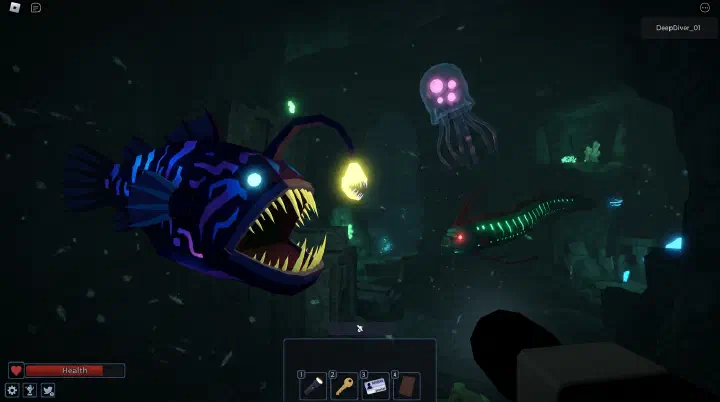
You are in a dark corridor. Room 37. The lights flicker. A screech tears through your headphones — high-pitched, rising, clean. You have 3.5 seconds to live. You die.
You just met Rush. And you died because nobody told you the one thing that matters: every Pressure entity announces itself with a unique sound. Learn the sounds and you stop dying. Ignore them and you die 50 times before Room 50.
This is a field manual organized by what you hear. Read the sounds. Memorize the response windows. Practice the drill. You will survive.
The Audio Roster: Sound to Survival
Clean high-pitched screech, rising, lights flicker once: Rush. 3.5 seconds. Enter the nearest closet — immediately. Not after looting. Not after one more step. The instant that screech registers, your feet move toward the nearest locker. Exit after the sound passes. The common death: freezing for 2 seconds while your brain processes the sound, then spending 1.5 seconds scanning for a closet. You enter at 3.2 seconds with 0.3 seconds to spare. Sometimes the closet is too far. Rush has killed more beginners than all other entities combined. Learn its sound first. For a full breakdown of locker timing and positioning, see the locker hiding mechanics guide.
Distorted glitchy screech, lower-pitched, wavers, lights flicker repeatedly: Ambush. 3.5 seconds before first pass. 2-5 seconds between passes. 2-6 total passes. Enter the nearest closet. Now count. After every pass, count to 3. If 3 seconds of silence pass, you are clear. If another screech tears through within those 3 seconds, stay put and count again. The death: exiting between passes. You hear silence for 2 seconds, think it is over, step out, and Ambush claims you on pass 4. Never assume the sequence is over. Count. Every. Time.
Loud mechanical grinding, deeper than a screech, like a broken engine revving: Pandemonium. 3-4 seconds to find a locker. Unlike Rush and Ambush, Pandemonium does not pass through. It stays at your locker and forces a minigame — keep your cursor centered on screen while the sound rages. The minigame lasts about 10-20 seconds. The death: assuming Pandemonium is just another Rush variant. You enter a locker, expect to exit in 5 seconds, and Pandemonium is still there. Your cursor drifts off-center, you panic, and you die. Stay calm. Center the cursor. Do not exit until the sound stops completely.
A whisper of “psst” in a dark room: Screech. 3 seconds. Spin a full 360 degrees smoothly. Screech’s glowing white eyes are visible in your peripheral vision. The moment your crosshair crosses its eyes, it vanishes and you take zero damage. The death: panicked, jerky spinning. Your mouse moves in stuttering arcs. You miss the eyes by 10 degrees. You die. Smooth, steady rotation. That is the only technique.
Heavy breathing and heavy footsteps: Figure. Detection is instant if you move during its listen phase. Walk only. Crouch-walk is better. When the footsteps stop and breathing becomes audible, freeze completely. Figure is blind and tracks exclusively by sound. Unbind your sprint key if you keep accidentally pressing it. The death: one twitch of the W key during listen phase. Figure locks onto you. Run is not an option.
Low humming, purple screen tint: Eyes. Detection is instant on room entry. Immediately look at the floor. Navigate by peripheral vision and wall-following. Looking at Eyes drains roughly 8% HP per second. A 3-second glance costs a quarter of your health bar. The death: you walk into the room, see the purple glow, and your instinct says “look at the threat.” Eyes punishes that instinct brutally.
Chase music intensifies, eyes appear on the walls: Seek. This is a chase sequence. No locker will save you. Run forward through the generated path. Dodge obstacles — fallen bookshelves, debris, collapsed walls. Turn your camera before corners. Look for the glowing door that marks the end. The death: stopping to search for a closet. Seek is a running encounter. Keep moving. The path is linear but obstacles are randomized. One hesitation and Seek catches you.
Loud roar, heavy charging footsteps: Grumble (The Mines). 2 seconds from roar to charge. Freeze. Grumble tracks movement. Wait 8-15 seconds for it to reposition. Walk to the exit when it moves away. Look up at the ceiling when entering every Mines room. The Hotel never taught you to look up. The death: entering a room, not checking the ceiling, triggering Grumble. It charges. You panic-sprint. Movement is exactly what Grumble locks onto. For every Mines-specific threat, see the Mines entity guide.
Wet gurgling and splashing: Giggle swarms (The Mines). Continuous chip damage. Sprint through. Do not fight. Giggles are slow and cannot catch a sprinting player. The death: standing your ground, trying to fight, dying to accumulated chip damage over 15 seconds. You cannot out-DPS a swarm. You can only outrun it.
Decision Framework: If You Hear This, Do That
When an audio cue hits, you have seconds. Here is the if-then table:
| If you hear… | Then immediately… | The wrong move |
|---|---|---|
| Clean rising screech + single flicker | Enter nearest locker, exit after one pass | Freezing to identify the sound |
| Distorted glitchy screech + repeated flickers | Enter locker, count 3s after each pass | Exiting between passes |
| Mechanical grinding/revving | Enter locker, center cursor, wait for silence | Treating it like Rush |
| “psst” whisper | Spin 360 degrees smoothly | Jerky panicked spinning |
| Heavy breathing + footsteps | Crouch-walk, freeze when steps stop | Sprinting |
| Low humming + purple tint | Look at floor, wall-follow | Looking at the source |
| Chase music + wall eyes | Run forward, dodge obstacles | Searching for a locker |
| Loud roar + heavy steps | Freeze, wait, move when it leaves | Sprinting |
| Wet gurgling/splashing | Sprint through, do not fight | Standing your ground |
This table works because it removes decision-making from the critical window. You do not identify the entity by name. You identify the sound and execute the row. No thinking. No debating. Sound in, action out.
For deeper audio training — learning to distinguish Rush from Ambush from Pandemonium in under a second — see the audio identification guide.
Failure Analysis: The 3 Ways You Die
Understanding why you die is as important as knowing what to do. These three patterns account for the vast majority of Pressure deaths. Recognize them. Break them.
Pattern 1: The Recognition Lag Death
What happens: An audio cue plays. Your brain spends 1.5-2.5 seconds identifying it. By the time you know what you are hearing, the response window is already half gone. You scramble, find a closet at 3.2 seconds, and die with your hand on the locker door.
Why it happens: Your brain is running a lookup table. “Is that Rush? Or Ambush? Or a distant explosion?” Every moment spent identifying is a moment not spent reacting.
The fix: Train audio recognition until it is automatic. Use the 3-minute drill described below. You need to hear the screech and move before your conscious brain names the entity. Reflex, not analysis.
Pattern 2: The Premature Safety Assumption
What happens: You survive the first pass of an entity. Silence. You assume the encounter is over. You step out of the closet. The entity returns and kills you.
Why it happens: Your brain treats “silence” as “safe.” In Pressure, silence is often the gap between attacks, not the end of them. Ambush exploits this mercilessly. So does Pandemonium. So does any multi-wave encounter.
The fix: Always count. After any entity encounter, count to 5 before moving. After Ambush specifically, count to 3 after every pass. If 3 seconds bring no new screech, you are clear. If a screech arrives, reset the count. Counting is boring. Dying is worse.
Pattern 3: The Instinct Inversion
What happens: Your survival instincts from other games kill you. You see a threat and look at it (Eyes kills you). You hear danger and sprint (Figure and Grumble lock onto you). You want to fight back (Giggles overwhelm you with chip damage). You hear a chase sound and search for a locker (Seek has no lockers).
Why it happens: Most games reward engagement. See enemy, face enemy, fight enemy. Pressure punishes engagement with most entities. The correct response is often the opposite of what your gaming instincts demand.
The fix: Relearn your reflexes. Eyes = look down. Figure = stop moving. Grumble = freeze. Seek = run. Giggles = run past. These are the opposite of what feels right. Drill them until they replace your old instincts.
5 Counter-Intuitive Truths About Pressure Entities
1. Sprinting is the wrong response to most threats. Rush, Ambush, Figure, Grumble, and Eyes all punish movement. Sprinting triggers detection or wastes your response window on a direction without a closet. The instinct to run is the single deadliest instinct in Pressure. Walk. Crouch. Freeze. Anything but sprint.
2. Looking at the entity is almost always fatal. Eyes punishes looking directly. Figure tracks by sound, but making noise while facing it still gets you killed. Even Screech — the one entity you must look at — requires a crosshair sweep, not a stare. Peripheral vision is your best friend.
3. Doing nothing is often the safest action. Figure approaches — freeze. Grumble roars — freeze. Ambiguous sound — freeze and listen. In a game that demands constant action, the winning move is frequently complete stillness. New players die because they feel compelled to do something. Veterans know when to do nothing.
4. Closets are not safe zones — they are timing tools. A closet protects you for exactly as long as the entity’s pass takes. Exit early and you die. The closet is a rhythm instrument. You enter on the beat, exit on the count. Treating it as a panic room encourages early exit — the most common Ambush and Pandemonium death.
5. Audio is more important than visuals. You can beat the game with your monitor off if you know every sound cue. Every entity telegraphs through sound before sight. Invest in decent headphones. Turn off music. Crank the SFX. Your ears are your primary survival organ.
The Learning Order
Not all entities are equally important. Learn in this order:
Rush first. Kills more beginners than all other entities combined. Master the 3.5-second response. Learn to distinguish its clean screech from every other sound in the game.
Ambush second. The multi-pass mechanic is the number one killer of intermediate players. You survived Rush. You think you understand closets. Ambush proves you wrong.
Pandemonium third. Appears at specific checkpoint doors. If you treat it like Rush, you die. Learn the minigame. Learn to stay calm when the sound does not stop. Ten minutes of practice and you will never panic-exit again.
Screech fourth. Easy counter once you know it. Requires headphones. Smooth rotation, not jerky panic. Three minutes of practice and you will never die to Screech again.
Figure fifth. Only appears at Doors 50 and 100. But those are the doors where dying costs the most progress. Learn to walk, crouch, and freeze on command.
Eyes sixth. The simplest fix in the game. Look at the floor. That is it. But you have to override the instinct to look at a threat, and that takes conscious practice.
Master these six and you survive 95 percent of encounters. The remaining entities are situational — learned through exposure, not through drills. Ten minutes of audio study, listening to Rush, Ambush, and Pandemonium side by side, replaces 3 hours of dying in the dark.
The 3-Minute Drill
This is the fastest way to build entity recognition. It is brutal. It works.
Enter a run. Sprint through rooms. Do not loot. Do not hide. When an entity kills you, restart. Repeat for 30 minutes.
In 30 minutes of drill, you will face 15-20 Rush encounters. In 2 hours of careful play, you might face 5. The drill compresses the learning curve. You die more, you learn faster. Each death teaches you the sound just a little better. By the end of one session, you will hear Rush and move before you consciously register the screech.
The drill is not fun. It is effective. Do it once. Then play normally. You will notice the difference immediately.
Related Guides
- Pressure Beginner Guide — Entities, Items & First Win
- Pressure Entity Timing Windows — Exact Seconds to React
- Pressure Survival Tips — 5 Protocols for Deep Runs
- Pressure Audio Identification — Learn Every Sound Cue
- Pressure Locker Hiding Mechanics — Timing & Positioning
- Pressure The Mines Entity Guide — Grumble, Giggle & Gloom
- Pressure Endless Mode Guide — Survival Beyond Room 100