The Lights Cut, and the Scream Isn’t Angler
It’s Door 47 on a clean run. Your team has been tight all night — no deaths, lockers on time, the Angler hummed past twice and you barely flinched. Then the hallway goes dark in a way it hasn’t before. The ambient drone drops. Fine, you think, Angler. You reach for the locker.
Then the scream starts.
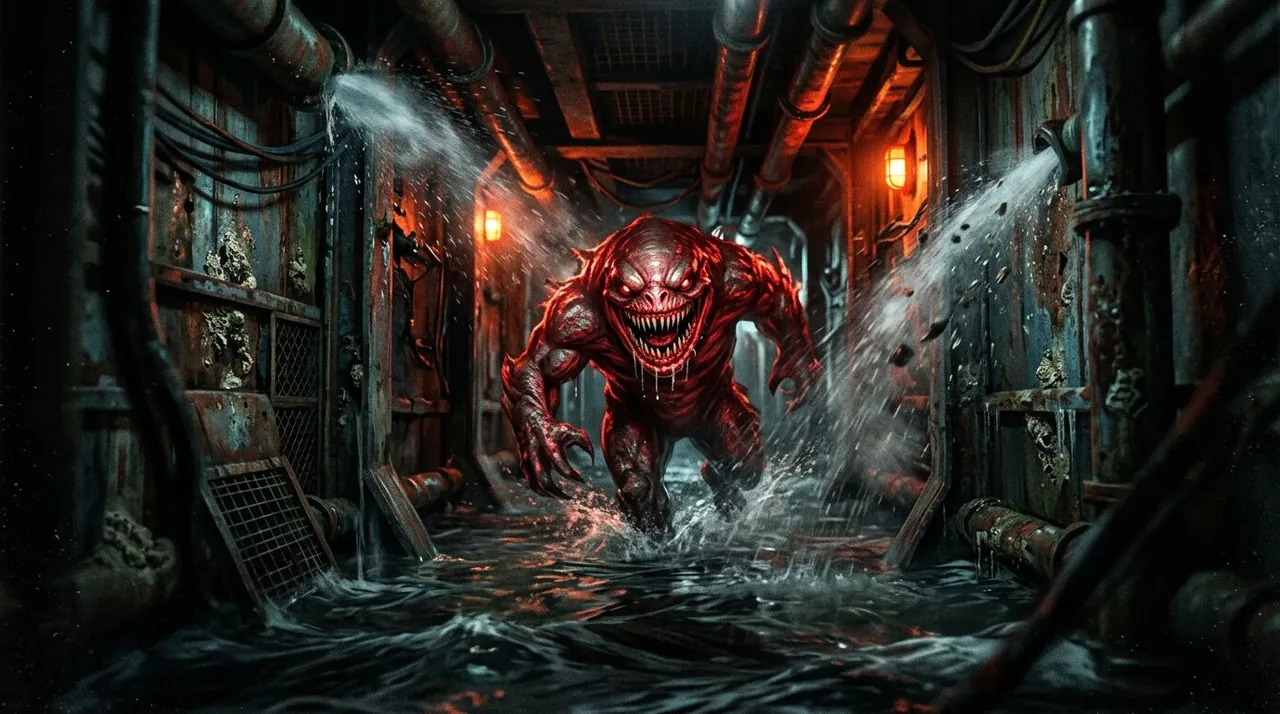
Not the rising static you’ve trained on. This is layered — several voices at once, a roar from inside the walls, above you, behind you. The screen shakes. Your teammate, already in a locker, shouts, “that’s not Angler.” Then the far wall bursts open and a huge red shape comes through it, grinning.
That’s Pandemonium, and the run just changed. Most players die to it on first contact because they play it like Angler. Pandemonium does not follow the rules you’ve practiced, and that gap is where the kill happens.
What Pandemonium Actually Is
Pandemonium is the rarest entity in Pressure’s chaser family. Where Angler and its variants show up run after run, Pandemonium is a coin you almost never see land — some players go many full runs without an encounter, then meet it twice in one night. That rarity is not a mercy. It means most players meet it with zero reps, and the first encounter decides the run.
The community describes it as huge — easily the biggest thing that chases you. Red and purple, faster than the Angler family, built around a massive grin. The grin is the detail everyone remembers, because you usually see it right before you die.
The behavior is what separates it. Pandemonium hunts. It doesn’t pass on a fixed rail like Angler. It breaks through walls, comes from directions the corridor doesn’t predict, and can reach spots that would be safe against a normal chaser. The entities guide runs the full roster; the short version is that most entities test whether you hide, and Pandemonium tests whether you can move.
One honest note up front: its behavior feels inconsistent between encounters. Some runs it rushes and leaves. Others it lingers or tests a locker. That inconsistency is part of why it’s scary — you can’t fully routinize it.
How Pandemonium Is Different From Angler and the Other Chasers
Angler trains you wrong on purpose. The whole Angler family runs the same loop: hear the cue, get in a locker, wait for it to pass, leave. The entire mid-game is built on that reflex, and it works — which is why it’s so dangerous when Pandemonium shows up.
The differences:
Angler passes. Pandemonium hunts. Angler moves through on a fixed line and keeps going. Pandemonium is after you, adjusts, breaks cover, and doesn’t respect the “it already went past” rule.
Angler is linear. Pandemonium isn’t. Angler-family entities come down the corridor the way you expect. Pandemonium can come through a wall or a side room. The audio guide calls its sound omnidirectional for exactly this reason — you can’t locate it like a hum down a hall.
A locker is enough for Angler. It might not be for Pandemonium. Against Angler, a shut door is a solved problem. Against Pandemonium, a locker is your first move, not a safe room.
Angler telegraphs seconds ahead. Pandemonium gives you less. The window between “that’s not Angler” and “it’s in the room” is shorter than players expect.
The shift that saves you: when you hear it, stop running the Angler script and run the Pandemonium script.
The Audio Tell: How to Hear It Coming
Pandemonium doesn’t hide. It’s the loudest thing in the game, and that’s your advantage, because the warning arrives before the body.
The signature is a layered, multi-voice scream. Not one roar — several overlapping, with no clear direction. Angler’s hum comes from down the hall. Pandemonium’s scream sounds like it’s everywhere at once, with screenshake on top so your screen and your ears both lie about where it is. That “everywhere at once” quality is the tell. If the roar sounds inside your skull instead of down the corridor, it’s not Angler.
The sequence: the ambient drone drops first, identical to every chaser. Then the scream. Then the walls break.
Don’t wait to fully identify it. The moment the ambience cuts and what follows is a layered scream rather than a clean hum, commit to the Pandemonium response. Waiting two more seconds to confirm is how people get caught mid-corridor.
Where It Hunts You and Why Hiding Is Different
Against Angler, the game is a locker puzzle: find the nearest one, get in, wait. Pandemonium breaks that puzzle two ways.
First, it breaks the map. A corridor you’ve run a hundred times has walls and corners you trust. Pandemonium doesn’t care about any of it. It can come through a wall, so “the hallway is empty” stops being reliable. The locker mechanics guide covers normal hiding, but against Pandemonium your position matters more than your locker.
Second, it breaks the locker. It’s so well-established that a locker saves you that most players never question it. Against Pandemonium, a locker is a first move. Reports describe it testing the door, and some players say it broke through. The safe assumption: a locker buys time and cover, not immunity.
The practical upshot: the safest spot is not the nearest locker. It’s the nearest spot off the main line of travel that lets you keep moving — a side room, a doorway you can retreat through, a corner with a second exit. If all you have is a locker on the main corridor, use it, but treat it as temporary.
A Step-by-Step Survival Routine
Here’s the sequence, in order. It’s short on purpose, because you’ll have seconds.
- Hear the ambience drop. Identical to every chaser. The room goes quiet. That’s your universal trigger, already wired in from the beginner guide.
- Hear the layered scream. A clean rising hum means Angler family. A directionless, layered scream with screenshake means Pandemonium. If it’s ambiguous, assume the worst — the Pandemonium response covers both.
- Commit instantly. Pick the nearest cover off the main corridor line and move. Hesitation is the number one killer here.
- Break line of sight, then reassess. Get into the locker or behind the wall, then ask: is this spot on the line it’s likely to travel? Does it have a second exit? If it’s bad, be ready to move on a gap.
- Don’t peek. The thing you’d peek at is hunting you and can reach your spot. Stay still, stay quiet, wait.
- Wait for the drone, then wait a beat more. The ambience returning is the all-clear for Angler. For Pandemonium it’s the signal to get ready, not to move. Let the drone fully return, count a second, then check the hall.
- Move away, not toward. Leave in the opposite direction of the encounter, toward the next door, ears open. If the scream picks up again, you’re already moving — the right state to be in.
That last step saves experienced players — Pandemonium punishes looking more than anything.
Failure Retrospective: The Peek That Killed the Run
Almost everyone has a version of this wipe.
The error. A player hears the ambience drop and the layered scream, gets into a locker fast — good. Then, a few seconds later, the screaming is still close and loud, and he cracks the door to see if it has passed. The moment the door opens, the thing is right there. It breaks the door open and the run ends.
The cause. He treated Pandemonium like Angler. With Angler, the hum fades down the hall and a quick peek confirms the pass. With Pandemonium, the scream doesn’t fade on that schedule, because the entity isn’t passing — it’s hunting. The sound stays loud because it’s still there, still close, and a peek doesn’t confirm safety. It gives away your position to something that can reach your locker.
The recovery. Same run structure, next night. He hears the same scream, gets into a locker, and keeps his head down through the whole encounter. He waits for the drone to fully return, counts a second, then checks the hall. Clear. He steps out, moves toward the next door, and survives. The only thing that changed was the one-second decision not to peek.
The deeper lesson: the peek isn’t a reflex mistake. It’s a model mistake. He was still running the Angler script, where peeking is safe and the sound fades as the threat leaves. Pandemonium doesn’t leave on that schedule.
If-Then: What to Do When Pandemonium Shows Up
Train this until it’s automatic, the same way you trained the Angler response.
| Situation | Then | Because |
|---|---|---|
| Ambience drops, then a layered scream | Run the Pandemonium script, not the Angler script | Directionless scream means it hunts, not passes |
| Ambience drops, clean rising hum | Nearest locker, shut door | That’s the Angler family, not Pandemonium |
| You’re mid-corridor when the scream starts | Sprint to the nearest cover off the main line, instantly | The corridor is exactly where it travels |
| You’re already in a locker | Don’t peek, stay still | It can reach a locker, and peeking gives you away |
| The scream is close and loud | Hold cover, don’t exit early | Loud doesn’t mean passing; it may be lingering |
| The ambient drone returns | Wait a beat, check the hall, then move away | The all-clear comes later for Pandemonium |
| The scream picks up again after you moved | Keep moving away, don’t stop to look | Movement beats freezing against a hunter |
The Counterintuitive Tip: Moving Beats Freezing
Here’s the advice that sounds wrong and is right.
Everything in Pressure teaches you to freeze. Angler comes, you hide, you stay still, it passes. The entire skill floor is built on not moving at the wrong time.
Pandemonium inverts it. Because it hunts rather than passes, the safest player is often the one moving, not the one frozen. A stationary target in a locker is something it can reach. A player who breaks line of sight and keeps repositioning is harder to pin down. Treat the locker as a brief shield, not a destination — hide, then move when the gap comes, the way you’d handle a real pursuer instead of a passing train. The spot that feels wrong, the one that points away from the threat, is the one that saves you.
FAQ
How rare is Pandemonium in Pressure?
Very rare, and that rarity is part of why it kills so many people. You can run dozens of doors without ever seeing it, then meet it once and die because you have never practiced the response. Some players report going many full runs without an encounter, while others say it showed up twice in one night. Treat every run as if it could appear, because it eventually will.
Can Pandemonium kill me through a locker?
Lockers are not a guaranteed wall against Pandemonium the way they are against Angler. The community broadly agrees Pandemonium can test lockers, and some players report it breaking a locker door or reaching someone who hid. Because behavior is reported inconsistently between encounters, treat the locker as a first move, not a safe room. Distance and staying out of its path matter just as much.
What is the best thing to do when I hear the roar?
First, do not assume it is Angler. The layered, omnidirectional scream is the giveaway. Move toward a locker immediately, but pick the nearest one that is off the main corridor line, and be ready to keep moving if it hunts toward your spot. The single best habit is to commit fast: hesitation is what kills you against Pandemonium.
Does Pandemonium come back after it passes?
Accounts differ, which is exactly the problem. Some players report a single pass, others say it circles back or lingers near a hiding spot it has marked. Because the behavior feels inconsistent, do not leave cover the moment the sound fades. Wait for the ambient drone to return fully before you move, and even then, check the hall before stepping out.
How is Pandemonium different from Angler?
Angler passes through a corridor on a fixed line and leaves. Pandemonium hunts. It breaks walls, it can appear from directions the corridor does not predict, and it does not simply rush past the way the Angler family does. Everything you learned about hiding from Angler still applies, but it is no longer enough on its own.
Related Guides
- Pressure Entities Guide — Every Monster, Behavior & Counter
- Pressure Audio Identification Guide — Sound Cues for Every Entity
- Pressure Locker Hiding Mechanics — How to Survive Every Entity
- Pressure Entity Timing Guide — How Long to Hold the Locker
- Pressure Survival Tips — General Advice for Longer Runs
- Pressure Beginner Guide — Start Here
- Pressure Multiplayer Guide — Team Callouts & Roles