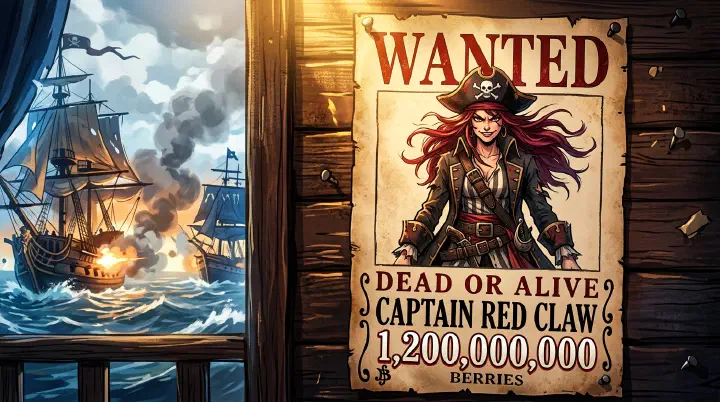
You spot a player with a 2.5 million bounty sailing alone near Shells Town. Your bounty is 500k. They’ve got no crew tag, no ship escort, and they’re just standing there fishing. Free money, right?
You pop your fruit ability, dash in, land the first hit — and then their Haki flares. Thirty seconds later you’re staring at the respawn screen. Your bounty just dropped to 450k. You didn’t check their level. You didn’t scout their fruit. You didn’t know that attacking a higher-bounty player as the aggressor puts YOUR bounty at risk, not theirs.
That’s the bounty system in Sailor Piece. It doesn’t care about your excitement. It cares about math, risk, and who actually understands the rules.
How the Bounty System Actually Works
Most players think bounty is simple: kill someone, gain bounty; die, lose bounty. That’s the toddler version. The real system has rules that determine how much you gain, how much you lose, and who actually risks something in the fight.
When you defeat another player, your bounty gain depends on their current bounty relative to yours. Beat someone with higher bounty? You get a solid chunk. Beat someone way below you? You get pocket change. Die to someone with lower bounty? You lose more than if you die to an equal or higher threat.
This creates a weird curve where farming low-bounty players is almost worthless for progression. You’re risking your own number for scraps. Yet half the server does exactly this because it feels safe. It isn’t. Safe feelings don’t protect your bounty.
Honor works on a parallel track. Pirates gain bounty through PvP kills. Marines gain honor through arresting pirates or defeating wanted players. The two systems look similar but the incentives diverge fast. A Marine with high honor is a target for pirates who want a big score. A pirate with high bounty is a target for Marines who need honor. Both sides are playing the same game with different scoreboards.
| Status | Gains From | Risks From | Typical Safe Zone |
|---|---|---|---|
| Low Bounty (<200k) | Beating anyone higher | Everyone | Open sea, starter islands |
| Mid Bounty (200k-1M) | Equal or higher targets | Marines, bounty hunters | Crew-guarded zones |
| High Bounty (1M+) | High-value duels, bait plays | Entire server | Hidden docks, crew ships |
| Marine Honor | Arresting pirates | Pirate bounty hunters | Marine bases, patrol routes |
Here’s the part the loading screen doesn’t tell you: bounty loss on death scales with your aggression status. If YOU attack first and die, you lose more bounty than if you were defending yourself. The game punishes bad judgment. Aggressors eat bigger penalties. That fishing player near Shells Town? They weren’t defenseless. They were baiting. And you took it.
Why Most Bounty Hunters Fail
I’ve watched hundreds of bounty fights. The ones who plateau around 300k and never climb share three specific failures.
They hunt targets based on convenience, not value. The player right in front of you is rarely the right target. Most bounty hunters just attack whoever’s nearby because they’re impatient. They’ll chase a 100k player across three islands for 2,000 bounty gain, then get jumped by that player’s crew and lose 50k. Every fight should pass a simple test: is the potential gain worth the potential loss multiplied by the risk of losing? If you can’t answer yes with confidence, sail away.
They don’t understand engagement timing. Sailor Piece has peak hours when the servers are full of casual players who don’t PvP seriously. It also has quiet hours when only the hardcore remain. Hunting during peak feels good because there are more targets, but the average target quality drops. You’re fighting tourists, not fighters. The real bounty climbs happen during off-peak when the server population is thin but the remaining players are either dedicated farmers or easy marks who don’t know the timezone meta.
They ignore the fruit and Haki scout. You have five seconds before a fight starts to assess what you’re walking into. Most players use zero. Check the fruit aura. Check if their Haki is active. Check their crew tag — not because crews are scary, but because crews mean backup might exist even if you don’t see it. A player standing still with Haki active isn’t AFK. They’re waiting for someone exactly like you.
The other failure mode is emotional. You lose bounty, get mad, and immediately hunt the person who beat you. That’s not strategy. That’s a tantrum. Revenge fights have terrible math because you’re emotionally compromised and they already proved they can beat you. Walk away. Farm elsewhere. Come back when you’re calm and they’ve forgotten your face.
When to Engage, When to Sail Away
Not every target is worth your time. Not every insult in chat is worth responding to. Here’s the actual decision framework top players use before they commit to a fight.
Check the bounty gap first. If they have less than 60% of your bounty, the gain is trash even if you win cleanly. If they have more than 200% of your bounty, the risk is massive if you mess up. Your sweet spot is targets between 75% and 150% of your current bounty. High enough to reward you. Close enough that skill, not raw stats, decides the fight.
Check the environment second. Open beach? Bad. Too many escape routes for them, too much visibility for third parties. Narrow channel between islands? Better. You control the engagement angles. Near a Marine base while you’re a pirate? Terrible unless you’re specifically hunting Marines. Near a spawn point? Horrible — they can respawn and re-engage with full health while you’re chunked.
Check your cooldowns third. This sounds basic but half the bounty hunters I watch blow their engage while their best ability is on cooldown because they got impatient. If your awakening or your best combo piece isn’t ready, you’re fighting with a handicap for no reason. Wait thirty seconds. The target won’t vanish. And if they do, they weren’t the right target anyway.
Check crew presence fourth. Solo players with high bounty are either extremely confident or extremely stupid. Most are confident. But a solo player with no crew tag might have crew members in the same server who just aren’t rendered in yet. Sailor Piece’s render distance can hide nearby players until you’re committed. If a target feels too easy, they might be the worm on the hook.
If four out of four checks look good, engage. If two or fewer look good, sail away. Three is judgment call territory — only take it if you’re warmed up and haven’t died recently.
The Target Priority System
Once you’re committed to hunting, you need an actual priority list or you’ll waste time chasing shadows.
Priority 1: Overconfident mid-bounty players. These are the 400k-800k players who think they’re good because they farmed AI bosses. They have bounty worth taking. They have ego worth exploiting. They’ll take fights they shouldn’t. They don’t know the map well enough to escape properly. These are your bread and butter.
Priority 2: Honor-stacked Marines patrolling solo. Marines with high honor often patrol predictable routes because they think their faction status protects them. It doesn’t. Pirates can attack anywhere. A solo Marine on a patrol route is a known position with predictable movement. Easy ambush. Big honor conversion to bounty.
Priority 3: Bounty farmers who just finished a fight. Someone who just killed another player is probably chunked. Their cooldowns are down. Their health isn’t full. They might be looting or celebrating. This is predatory. It works. The bounty system doesn’t penalize you for being opportunistic. It penalizes you for being dead.
Priority 4: Crewless high-bounty players in isolated zones. These players are either baiting or genuinely alone. The isolated zone part matters more than the crewless part. If they’re on a remote island with no fast travel nearby, they can’t call backup effectively. Even if they win round one, you can re-engage after healing because they can’t easily leave.
Avoid: Groups of two or more unless you’re equally grouped. Avoid: Players who keep running to specific locations — they’re leading you into a trap or toward allies. Avoid: Anyone whose bounty hasn’t moved in weeks but whose level is high — they’re probably alt accounts or inactive mains who only log in to stomp hunters.
The Counter-Intuitive Truth About High Bounty
Here’s what broke my brain when I finally understood it: having a high bounty isn’t a liability. It’s a weapon.
Most players see a 3 million bounty and think “I should avoid that player.” But the bounty system rewards defeating high-bounty targets disproportionately. A player with 3 million bounty who gets killed loses a chunk, yes — but the player who kills them gains enough to justify enormous risk. High bounty players are walking jackpots.
The real advantage isn’t the intimidation factor, though that exists. The real advantage is that high bounty unlocks access to the best targets. Other high-bounty players will actually fight you instead of running. Marines with stacked honor will prioritize you, which means you can farm them predictably. You become a beacon for everyone who wants a big score — which means you get to choose your fights instead of hunting for them.
The secret top players don’t advertise: the best bounty hunters don’t hunt. They bait.
They sail to predictable spots. They let lower-bounty players think they’re easy prey. They let Marines think they’re doing their job. Then they turn the fight, win cleanly, and gain bounty from people who came to them. Baiting removes the environmental uncertainty. You control the terrain because you chose it. You know the escape routes because you planned them. Your cooldowns are ready because you weren’t chasing someone across the map.
This is why you’ll see players with 5 million+ bounty just standing on docks looking AFK. They’re not AFK. They’re fishing for fighters. And most of the time, it works.
PvP Combat Tips for Bounty Climbs
The system knowledge means nothing if you can’t execute in the fight itself.
Combo discipline beats flashy plays. Every fruit in Sailor Piece has an optimal combo string. Learn yours until it’s muscle memory. Don’t improvise in bounty fights. Improvisation creates openings. Openings get you killed. Practice your full combo on training dummies until you can land it while distracted, while low health, while panicking.
Haki timing wins fights, not Haki uptime. Players love keeping Armament Haki active constantly. It drains. It telegraphs your threat level. Better players activate Haki exactly when they’re committing to a combo, then let it drop. The element of surprise matters. A player who suddenly flares Haki mid-fight is scarier than one who’s been glowing red for five minutes.
Learn the respawn timers. If you defeat someone, you have a window before they can return to the fight. Use it to heal, reposition, or leave. Don’t stand on their body emoting. That’s how you get killed by their crewmate who just fast-traveled in. The taunt isn’t worth the bounty loss.
Use the sea. Most players treat water as an obstacle. It’s actually a zoning tool. Force fights near water edges and you limit escape directions. Certain fruits have water weaknesses you can exploit. Even players with water-safe fruits often panic when forced into aquatic positioning because it’s outside their comfort zone.
Track your own tilt. The bounty system is psychological warfare. Losing streaks happen. What separates climbers from stagnators is the ability to stop. If you’ve died twice in thirty minutes, log out or switch to PvE. Your mechanics degrade when you’re frustrated. The server will still be there in an hour. Your bounty won’t recover itself while you’re tilt-chasing.
Marine vs Pirate: The Honor Angle
Marine players often feel like they’re playing a different game, and in some ways they are. Honor gains from arresting pirates require different positioning — you need to bring pirates to low health and then use the arrest mechanic, not just kill them. This creates a risk window where the pirate can turn the fight while you’re trying to secure the arrest.
The upside is that honor gains from arrests can exceed standard bounty gains from kills, especially against high-tier wanted players. A Marine who consistently arrests 1 million+ bounty pirates climbs honor faster than a pirate who inconsistently hunts random targets.
The downside is visibility. Marines in uniform are obvious. Pirates can choose to look innocuous. A Marine’s faction mark makes them a target the moment they render. If you’re playing Marine for honor, you need to either embrace the visibility and get good at defensive fighting, or play undercover without uniform and lose some arrest efficiency.
Most successful honor farmers mix both. They patrol in uniform when crewed or in safe zones. They go undercover when hunting solo in pirate-heavy areas. Flexibility beats purity every time.
Putting It All Together
The bounty and honor system in Sailor Piece rewards players who treat PvP like a strategy game, not a brawl. Every fight is a bet. Your bounty is your bankroll. Bad bets drain you. Good bets compound.
Start with the framework. Check bounty gaps, environments, cooldowns, and crew presence before you engage. Prioritize overconfident mid-tier players and honor-stacked Marines. Avoid emotional revenge fights and convenient-but-worthless targets near your own level.
Embrace the counter-intuitive play. High bounty is an asset, not a burden. Baiting beats hunting. Defense sometimes pays better than offense because defending players lose less on death.
And when you lose — because you will, everyone does — analyze why. Wrong target? Bad timing? Missed scout? Mechanical error? The bounty system is unforgiving but it’s also honest. It tells you exactly where your judgment failed. Listen to it.
Your next fight starts before you ever press the attack button. Make sure you’ve already won the decision.