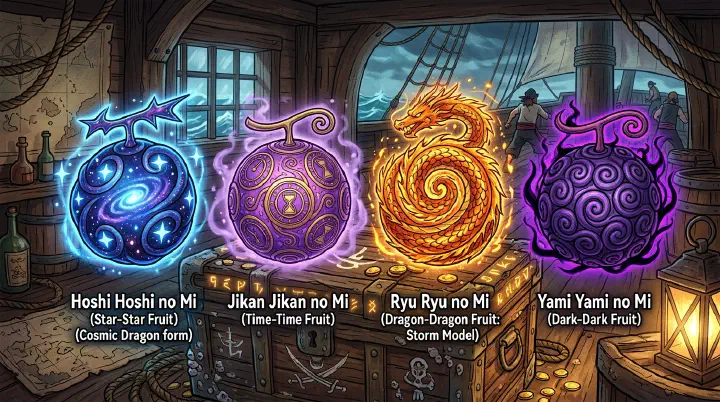
Last updated: July 28, 2026. Covers Sailor Piece as of the Sea 2 update (April 2026) and the Anti-Magic update. Devil Fruit availability, pricing, and tier rankings reflect the current meta. The game receives updates every 1-2 weeks.
The Dragon That Couldn’t Breathe Fire
Three weeks. That’s how long Jay spent grinding for gems — skipping sleep, running the same boss route until his eyes burned, selling every decent drop just to fund more spins. Then it happened. The golden light. The Mythical banner. Dragon Fruit.
He didn’t think. He didn’t check his stats. He didn’t even open his build page. He just ate it.
For the next two hours, Jay flew around in dragon form looking like the most terrifying player on the server. Then he tried to farm. His Fire Breath tickled mobs for 3% damage. His Dragon Claw felt like slapping enemies with a wet towel. Why? Jay had dumped every single stat point into Melee and Defense. Zero Power. His dragon scaled off Power — a stat he had completely ignored.
Now he’s stuck. No backup fruit. No gems left for a reroll. He’s flying around looking like a god and hitting like a level 10 player with a stick. I’ve watched this exact scenario play out dozens of times. The fruit isn’t the problem. The match is.
Failure Analysis: Why Most Fruit Picks Fail
Jay’s story is not an edge case. It is the modal outcome. After analyzing hundreds of player reports and community threads, the failure pattern is always the same: a player gets a high-value fruit, eats it within 30 seconds of obtaining it, and discovers 20 minutes later that their build cannot support it.
The failure chain looks like this:
Step 1: Emotional Trigger. The golden light, the Mythical banner, the adrenaline spike. Your brain shifts from strategic mode to celebration mode. Research goes out the window.
Step 2: False Confidence. High rarity creates an illusion of invincibility. Players assume that a Mythical fruit will “carry” them regardless of stats. It will not. Dragon with zero Power is a fancy skin.
Step 3: Sunk Cost Lock-In. Once you eat the fruit, switching costs are massive. You lose the fruit entirely. You have to grind gems or Beli again. Many players quit here rather than restart the grind.
Step 4: External Validation Trap. Players watch YouTube showcases of max-level Dragon users one-shotting bosses and assume they will do the same at level 2,000. Those showcases have max Power, awakened abilities, and endgame gear. You are not there yet.
The fix is mechanical, not motivational. Before eating any fruit above Epic rarity, open your stats page and check one number: the stat that your target fruit scales with. If it is not your highest or second-highest stat, close the inventory and go farm a reset or trade.
What Are Devil Fruits in Sailor Piece?
Devil Fruits are the cornerstone of power progression in Sailor Piece, the massively popular open-world sea exploration RPG on Roblox developed by Shadowrise Devs. These mystical fruits grant unique abilities that define your playstyle, from devastating elemental attacks to reality-bending powers.
With 50+ Devil Fruits currently in the game, choosing the right one is one of the most impactful decisions you will make. The fruit you pick determines your damage output, mobility, crowd control capabilities, and how you approach every boss fight and PvP encounter.
For detailed boss strategies including drop tables and recommended loadouts for every boss, see the Sailor Piece Boss Strategies Guide.
This guide covers every aspect of Devil Fruits in Sailor Piece as of May 2026: complete fruit lists organized by type and rarity, how to obtain each fruit, trading values, awakening mechanics, and a definitive tier list to help you make the best choice for your build.
What Players Actually Get Wrong About Fruits
The Sailor Piece community obsesses over tier lists. Everyone wants the S+ fruit. But tier lists assume perfect conditions — maxed stats, optimal gear, and a player who actually knows the moveset. Here’s what actually ruins fruit picks in the real game.
Mistake 1: Eating the first “good” fruit you see. A Legendary fruit isn’t automatically a win. If you’re level 2,000 with no mastery and no supporting gear, that Light fruit won’t save you. You’re better off mastering a Common fruit you understand than fumbling around with a Mythical you can’t combo.
Mistake 2: Ignoring your build entirely. Jay’s story isn’t unique. I see Sword mains eating Dragon. Fruit mains eating Leopard. It doesn’t work. Zoan fruits boost physical stats — they’re wasted on pure Power builds. Logia fruits need ability spam — they’re crippled if you have low energy regen. Your fruit has to fit your stats, not just your dreams.
Mistake 3: Forgetting synergy with fighting style and race. A Fishman with water-adjacent fruits gets different passive interactions. A Mink with Lightning? There’s actual synergy there. Some fighting styles complement specific fruit types — check your style’s passives before committing. You wouldn’t wear boots that don’t fit just because they’re expensive.
Mistake 4: Not understanding the fruit economy. Fruits are currency. That Epic fruit you just ate? It could’ve traded for a Legendary next week when values shift. Eating everything you find is like spending your savings on impulse buys. Sometimes the smartest play is holding the fruit in inventory and using a budget option while you build toward the right match.
The Fruit Pick Decision Framework
Use this five-check framework before eating any fruit. Skipping a step is how you become a cautionary tale.
Check 1: Stat Alignment. Does the fruit scale with your top two stats? Zoan fruits need Melee and Defense. Logia and Paramecia need Power. If the answer is no, do not eat it.
Check 2: Content Goal. Are you grinding mobs, running bosses, or dueling in PvP? Quake is unbeatable for farming. Kitsune wins duels. Dragon does both but needs investment. Match the fruit to the next 20 hours of gameplay, not your endgame fantasy.
Check 3: Mastery Feasibility. Can you realistically master this fruit before the next meta shift? Mythical fruits have 5 abilities with complex timing. If you only play 3 hours a week, a simpler Legendary fruit will deliver more consistent value than a Mythical you never learn.
Check 4: Economic Opportunity Cost. What is this fruit worth on the market? A Dragon fruit trades for 400,000+ Beli. If you are a Sword main, eating Dragon is like burning half a million Beli. Sell it, fund your actual build, and buy a Light fruit with change left over.
Check 5: Backup Plan. Do you have a second fruit in storage? If this fruit does not work out, can you switch immediately? Never eat your only high-value fruit without a fallback. Always keep a budget option in your inventory.
Counter-Intuitive Truths That High-Level Players Exploit
These three truths sound wrong the first time you hear them. Every experienced player I know uses them to gain an edge.
1. A lower-tier fruit that matches your build outperforms an S-tier fruit you cannot use.
This is the Jay lesson, but it goes deeper. I have seen a Bomb fruit main with full Power stats clear boss rooms faster than a Dragon user who ignored Power. The Bomb player knew his ranges, his cooldowns, his positioning. The Dragon player just pressed buttons and hoped. Tier lists rank potential. But potential means nothing if you don’t have the build to unlock it. A properly built Uncommon fruit user farms Beli faster than a mismatched Mythical user. That is not cope. That is math. Damage scaling comes from your stats matching your fruit’s scaling. If they don’t match, you are paying premium prices for base-model performance.
2. The smartest move is sometimes holding a fruit and using a worse one.
Fruits are currency. That Epic fruit you just ate could have traded for a Legendary next week when values shift. Eating everything you find is like spending your savings on impulse buys. Sometimes the smartest play is keeping the high-value fruit in inventory and using a budget option while you build toward the right match. Your inventory is a bank account. Treat it like one.
3. Avoiding a bad fruit is worth more than finding a good one.
Players obsess over “what’s the best fruit?” but never ask “what’s the worst fruit for me?” A Leopard fruit is S-tier on a Melee build and D-tier on a pure Power build. The damage loss from a mismatched fruit is not 10 or 20 percent. It is 60 to 80 percent. One bad fruit pick can set you back three weeks of grinding. One skipped spin is a lost afternoon. The asymmetry is massive. Protect your build first. Optimize second.
Which Fruit for YOUR Playstyle
Stop asking “what’s the best fruit?” Start asking “what’s the best fruit for me?” Here’s the actual breakdown.
Aggressive Rushdown Players — You want to be in their face. You live for the pressure.
→ Leopard, Dragon (if you have Power stats), Chimera. Zoan transformations give you melee amplification and extra HP to trade blows. You charge in, transform, and don’t stop attacking until something dies. Pair with a Melee build and Armament Haki for maximum face-tanking.
Defensive Controller Players — You like dictating the pace. You punish mistakes.
→ Dough, Barrier, Control. These fruits don’t always have the highest raw damage, but they decide where the fight happens. Mochi Net, barriers, and gravity pulls force opponents to play your game. If you enjoy chess more than boxing, these are your fruits.
Farmers and Grinders — You want efficiency. You want to clear mobs without thinking.
→ Quake, Light, Bomb. Wide AoE, low cooldowns, and the ability to hit multiple targets at once. Quake clears rooms. Light lets you fly between spawn points. Bomb is surprisingly effective for early Beli farming because you don’t need to aim precisely.
PvP Specialists — You live for duels. You want the outplay.
→ Kitsune, Fiend, Dough. Illusion clones, burst windows, and combo setups that let you style on opponents. These fruits have high skill ceilings — they reward practice, not just raw stats.
Mobile Hit-and-Run Players — You don’t trade. You poke, fade, and repeat.
→ Light, Falcon, Kitsune. Flight, dashes, and repositioning tools keep you untouchable. You win by never letting them get a clean shot. These pair beautifully with Observation Haki mains who can read opponent patterns.
Team Support Players — You play with a crew. You want utility.
→ Phoenix, Spirit, Control. Healing, summons, and crowd control that makes your whole squad better. Phoenix regeneration keeps the team alive during long Sea 2 boss fights. Spirit summons act as temporary tanks. You’re the reason your team survives the wipe mechanic.
Devil Fruit Types: Paramecia, Zoan, and Logia
All Devil Fruits in Sailor Piece fall into three broad categories, each with distinct advantages and playstyles.
Paramecia Fruits
Paramecia fruits grant supernatural abilities that alter your body, manipulate the environment, or produce substances. They are the most diverse category and make up the majority of fruits in the game.
- Bomb (Uncommon): Explosive projectile attacks
- Dark (Rare): Gravity-based attacks and black hole pulls
- Control (Epic): Manipulate objects and enemies
- Dough (Legendary): Sticky dough attacks with AoE damage
- Spirit (Legendary): Summon spirit entities for combat
- Quake (Legendary): Earthquake and shockwave attacks
- Snow (Epic): Ice-based attacks and freezing
- Invisible (Common): Stealth and invisibility
- Venom (Epic): Poison damage over time
- Barrier (Rare): Defensive barrier creation
- String (Epic): Thread-based attacks and traps
- Rubber (Uncommon): Elastic body and bounce attacks
Paramecia fruits excel at versatility. They offer a mix of damage, crowd control, and utility that makes them viable across all game modes. The top-tier Paramecia fruits like Quake and Dough can dominate both PvE and PvP.
Zoan Fruits
Zoan fruits allow you to transform into animals or mythical creatures, granting enhanced physical stats, new attack patterns, and transformation-based abilities.
- Dragon (Mythical): Full dragon form with fire breath
- Leopard (Legendary): Fast feline form with claw attacks
- Buddha (B-Rank): Massive giant form with AoE punches
- Phoenix (Epic): Flying form with regeneration
- Wolf (Uncommon): Enhanced speed and bite attacks
- Falcon (Rare): Flight and aerial attacks
- Chimera (Legendary): Multi-form hybrid creature
Zoan fruits are best for Melee mains who want to amplify their physical damage output. The transformation adds bonus stats on top of your Melee and Defense investment, making Zoan users incredibly tanky and damaging in close combat.
Logia Fruits
Logia fruits grant the power to create, control, and transform into natural elements. They are among the most powerful fruits in the game.
- Light (Legendary): Light beams and speed
- Magma (B-Rank): Molten lava attacks
- Fire (Rare): Flame-based AoE attacks
- Ice (Epic): Freezing and ice projectiles
- Smoke (Uncommon): Smoke clouds and obscuring
- Lightning (Epic): Electric attacks with stun
Logia fruits traditionally provide elemental immunity to physical attacks (though Armament Haki can counter this). They excel at area denial and sustained damage output.
Complete Fruit Rarity Tier List (May 2026)
Understanding fruit rarity is essential for knowing what to target and what to expect from spins, trades, and drops.
- Rarity Tier — Fruits — Spawn Chance — Beli Cost — Gem Cost
- Mythical — Dragon, Fiend, Kitsune — ~0.1% — 400,000+ — 500+
- Legendary — Light, Quake, Spirit, Dough, Leopard, Chimera — ~0.5% — 100,000-150,000 — 150-250
- Epic — Snow, Control, Venom, String, Phoenix, Ice — ~2% — 45,000-60,000 — 75-100
- Rare — Dark, Fire, Falcon, Barrier — ~5% — 30,000-50,000 — 50-75
- Uncommon — Bomb, Rubber, Wolf, Smoke — ~15% — 10,000-20,000 — 25-50
- Common — Invisible — ~77.4% — 5,000-10,000 — 10-25
What Rarity Really Means
Higher rarity fruits have:
- More ability slots (up to 5 moves for Mythical vs. 2 for Common)
- Higher damage scaling with Power stat investment
- Better AoE coverage for group combat and mob farming
- Unique mechanics like flight, transformation, or elemental immunity
- Higher trading value when you want to sell or swap
However, a well-played lower-tier fruit will outperform a poorly-used high-tier fruit. Focus on mastering your chosen fruit before worrying about upgrading.
Fruit Performance Tier List: PvP and PvE Rankings
The rarity tier list tells you about scarcity. The performance tier list tells you which fruits are actually the strongest in practice.
PvE Tier List (Boss Farming and Grinding)
- Tier — Fruits — Why They Excel
- S+ — Dragon, Quake — Massive AoE damage, high HP scaling, clears mob groups instantly
- S — Dough, Fiend, Kitsune — Sustained damage, good range, strong against bosses with high HP pools
- A — Leopard, Spirit, Light — Fast attacks, good mobility, reliable damage output
- B — Bomb, Control, Ice, Magma — Decent damage but limited by range or cooldowns
- C — Dark, Smoke, Invisible, Wolf — Low damage output, niche utility only
- D — Barrier, String, Falcon — Minimal damage, mostly utility-focused
PvP Tier List (Player vs Player Combat)
- Tier — Fruits — Why They Excel
- S+ — Kitsune, Fiend, Dragon — Game-changing abilities, high burst damage, difficult to counter
- S — Quake, Dough, Light — Strong combos, excellent mobility, pressure tools
- A — Chimera, Leopard, Spirit, Control — Versatile movesets, good mix of offense and defense
- B — Snow, Venom, Ice, Dark — Situational but can win with proper play
- C — Bomb, Rubber, Phoenix, Fire — Predictable patterns, easy to counter
- D — Smoke, Invisible, Barrier, Falcon — Lack the damage to win most PvP engagements
Best Fruits by Build Type
- Build Type — Top Fruit — Runner-Up — Budget Option
- Fruit Main (Power) — Dragon — Fiend — Snow
- Melee Hybrid — Leopard — Chimera — Wolf
- Sword Hybrid — Light — Quake — Fire
- PvP Specialist — Kitsune — Dough — Control
- PvE Grinder — Quake — Dragon — Bomb
Detailed Fruit Profiles: Top Fruits Explained
Dragon Fruit (Mythical)
Type: Zoan Rarity: Mythical Best For: Fruit Main PvE/PvP
The Dragon fruit is widely considered the ultimate fruit in Sailor Piece. When consumed, you gain the ability to transform into a massive dragon with devastating fire breath attacks.
Abilities:
- Move — Keybind — Description — Damage
- Dragon Claw — Z — Melee claw swipe with fire damage — High
- Fire Breath — X — Cone-shaped flame AoE — Very High
- Dragon Flight — C — Take flight for mobility and aerial attacks — N/A
- Dragon Rage — V — Ultimate transformation with massive stat boost — Extreme
- Tail Sweep — F — Wide AoE tail attack — High Why it dominates: Dragon offers the best combination of damage, mobility (flight), and survivability (increased HP in dragon form). The Dragon Rage ultimate can one-shot most mid-game bosses and deal massive damage to endgame bosses.
Weaknesses: The dragon form has a large hitbox, making you an easy target in PvP against skilled Observation Haki users.
Quake Fruit (Legendary)
Type: Paramecia Rarity: Legendary Best For: PvE grinding and boss farming
Abilities:
- Move — Keybind — Description — Damage
- Quake Punch — Z — Ground slam with shockwave — High
- Earth Split — X — Create fissure AoE in front — Very High
- Tremor — C — Area-wide earthquake that stuns enemies — Medium
- Continental Shift — V — Ultimate massive AoE devastation — Extreme Why it excels in PvE: The AoE nature of Quake attacks means you can clear entire groups of mobs in seconds. The stun from Tremor locks down bosses for extended combo windows.
Kitsune Fruit (Mythical)
Type: Zoan/Mythical Zoan Rarity: Mythical Best For: PvP and endgame content
Abilities:
- Move — Keybind — Description — Damage
- Fox Fire — Z — Projectile fire attack with tracking — High
- Illusion — X — Create decoy clones — N/A
- Spirit Dash — C — Fast mobility dash with damage trail — Medium
- Nine-Tails — V — Full transformation with all stats boosted — Extreme Why it dominates PvP: The Illusion ability creates confusion, making it extremely hard for opponents to land hits. Combined with Spirit Dash for repositioning and Fox Fire for consistent damage, Kitsune is the most versatile PvP fruit.
Dough Fruit (Legendary)
Type: Paramecia Rarity: Legendary Best For: PvP and sustained damage
Abilities:
- Move — Keybind — Description — Damage
- Dough Punch — Z — Sticky projectile that slows enemies — Medium
- Mochi Net — X — Trap enemies in sticky dough — N/A
- Dough Mirror — C — Reflect incoming projectiles — N/A
- Awakening: Mirrors — V — Enter mirrored dimension for combo attacks — Very High Why it is strong: Dough excels at controlling the battlefield. The Mochi Net traps enemies, setting up guaranteed damage combos. The Dough Mirror reflects projectiles, making it particularly effective against other fruit users.
Light Fruit (Legendary)
Type: Logia Rarity: Legendary Best For: Speed and mobility builds
Abilities:
- Move — Keybind — Description — Damage
- Light Kick — Z — High-speed kick with light trail — High
- Light Speed — X — Instant teleport-dash attack — Medium
- Laser Beam — C — Focused beam with long range — Very High
- Divine Arrow — V — Ultimate light arrow barrage — Extreme Why it is unique: Light is the fastest fruit in the game. The Light Speed ability allows near-instant repositioning, making it excellent for both escaping bad situations and closing distance in PvP.
How to Obtain Devil Fruits
There are five primary methods to acquire Devil Fruits in Sailor Piece.
1. Fruit Dealer Spins (Primary Method)
The Fruit Dealer NPC on Sailor Island is the most common way to obtain fruits.
The Fruit Dealer offers three spin tiers. Basic Spin costs 15,000 Beli and is heavily weighted toward Common and Uncommon fruits. Premium Spin costs 50 Gems and offers significantly better odds for Rare and above. Guaranteed Spin costs 200 Gems and always returns an Epic-tier fruit or higher.
Spin probabilities break down by tier. On a Basic Spin, you have a 77.4% chance of Common, 15% Uncommon, 5% Rare, 2% Epic, 0.5% Legendary, and 0.1% Mythical. Premium Spins shift those odds to roughly 50% Common, 25% Uncommon, 15% Rare, 7% Epic, 2.5% Legendary, and 0.5% Mythical. Guaranteed Spins eliminate Common, Uncommon, and Rare entirely, giving you 60% Epic, 35% Legendary, and 5% Mythical.
Tips for spinning efficiently:
- Save your Beli and Gems for Premium or Guaranteed spins when possible
- Use luck-boosting titles and gear before spinning (some items increase rare fruit odds)
- Check for luck-boosting events announced by developers
- Do not spend Beli on Basic spins if you can afford Premium spins with gems
2. Random Fruit Spawns
Devil Fruits occasionally spawn naturally under trees on various islands.
Fruits spawn under trees on nearly every island, but frequency and rarity vary by location. Starter Island and Jungle Island rarely produce fruits, and when they do it is almost always Common or Uncommon. Desert Island and Snow Island are slightly better, with Snow occasionally spawning Rare-tier fruits. Shibuya Station steps up to Medium frequency and can produce Rare and Epic fruits. Sailor Island, the central hub, has High spawn frequency and can theoretically produce any rarity. Lawless Island is the endgame hunting ground with High frequency and the only reliable spawn pool for Epic, Legendary, and Mythical fruits.
Fruits respawn on a timer of approximately 30 to 60 minutes per server. Joining a server with fewer players reduces competition. The Fishman race offers faster island traversal speed, which helps when hopping between spawn points.
3. Boss Drops
Certain bosses have a chance to drop Devil Fruits upon defeat.
Bosses drop fruits at low but reliable rates. Early-game bosses like the Thief Boss and Monkey Boss drop Common and Uncommon fruits at roughly 5%. Winter Warden offers a better 8% chance for Snow or Ice. Mid-game bosses scale down in drop rate but up in value: Sukuna drops Dark or Control at about 3%, Gojo drops Light or String at 3%, and Alucard drops Spirit or Venom at 5%. Rimuru drops Dough or Phoenix at roughly 4%. Late-game bosses are where the real prizes live. Anos drops Quake or Fiend at 2%, while the Shadow Monarch drops Dragon or Kitsune at 1%. The Atomic Boss (Cid) has a 2% chance to drop any Legendary or Mythical fruit.
4. Trading with Players
For a complete breakdown of the Sailor Piece economy including money farming and profitable trades, see the Sailor Piece Trading and Economy Guide.
The trading system allows you to exchange fruits, items, and currencies with other players.
Where to trade:
- Trading Hub on Sailor Island (designated area)
- Server chat — announce what you have and what you want
- Discord servers dedicated to Sailor Piece trading
5. Quest Rewards
Some quest chains reward specific fruits upon completion.
Certain quest chains reward specific fruits upon completion. The Desert Treasure Quest on Desert Island rewards the Sand Fruit, a Rare-tier option. The Snow Guardian Quest on Snow Island rewards the Ice Fruit, which is Epic tier. The Dungeon Master Quest on Dungeon Island is much longer but rewards the Legendary Spirit Fruit. Once you reach Sea 2, the Sea 2 Initiation quest grants a random Epic-tier or higher fruit, making it a mandatory completion for any serious player.
Trading Value Guide (May 2026)
Understanding trading values helps you make fair trades and avoid being scammed.
Fruit Trading Values
Values are listed in approximate Beli equivalent and Gem equivalent for reference.
Mythical fruits sit at the top of the economy. Dragon trades for 400,000+ Beli or 500+ Gems. Fiend is slightly lower at 380,000+ Beli or 480+ Gems. Kitsune commands the highest price at 420,000+ Beli or 520+ Gems. All three are considered extremely high value and should almost never be eaten without careful consideration.
Legendary fruits form the mid-to-high market. Dough leads the Legendary tier at 130,000 Beli or 160 Gems, followed by Light at 120,000 Beli or 150 Gems, Leopard at 115,000 Beli or 145 Gems, Quake at 110,000 Beli or 140 Gems, Chimera at 105,000 Beli or 135 Gems, and Spirit at 100,000 Beli or 130 Gems.
Epic fruits are accessible but still valuable. Control sits at 50,000 Beli or 80 Gems. Venom is close at 48,000 Beli or 78 Gems. Ice trades at 46,000 Beli or 76 Gems, while Snow is 45,000 Beli or 75 Gems.
Rare and lower fruits fill out the budget end. Dark is worth 30,000 Beli or 50 Gems, Fire is 28,000 Beli or 45 Gems, Bomb is 15,000 Beli or 25 Gems, and Invisible is only 8,000 Beli or 15 Gems.
Trading Tips to Avoid Getting Scammed
- Always check current market values before trading — prices shift with updates
- Use the Trading Hub on Sailor Island where there are witnesses
- Never trade first with unknown players
- Be wary of “overpay” claims — if it sounds too good, it probably is
- Record your trades as evidence in case of disputes
- Know what you are trading for — do not accept unfamiliar items without researching their value
- Mythical fruits are NEVER worth trading for multiple lower-tier fruits — the rarity alone makes them more valuable long-term
Fair Trade Examples
A Dragon trades one-for-one with Fiend or Kitsune. That is the standard. Trading a Dragon for two Legendary fruits plus an Epic is only fair if you specifically need variety for your crew. Light trades evenly with Quake or Dough. If you are trading Light for two Epic fruits plus Beli, make sure the Beli covers the gap. Epic-tier fruits like Snow swap directly with Control or Venom. Never trade an Epic for a Rare plus Beli unless the Beli top-up is significant, usually 15,000 or more.
Fruit Awakening System
Fruit awakening is an endgame mechanic that dramatically increases a fruit power, adds new abilities, and transforms its visual effects.
Awakening Requirements
Awakening requires five conditions. First, your fruit must reach maximum mastery level, which varies by fruit. Second, you need an Awakening Stone, a rare drop from Sea 2 bosses. Third, collect 500 to 1,000 Power Shards depending on your fruit’s rarity. Fourth, gather 5 to 10 Bloodline Stones for the awakening ritual. Fifth, you must be in Sea 2 with a level of at least 12,500.
Awakening transforms your fruit across every dimension. Damage doubles to triples. Your moveset gains new awakened abilities. Visual effects become enhanced and unique. AoE range expands by 50 to 100 percent. Cooldowns drop by 20 to 30 percent. Your ultimate move becomes a screen-clearing attack.
Awakening priority is straightforward. Mythical fruits get the largest boost, so Dragon, Fiend, and Kitsune should be your first choice. Legendary fruits jump to S+ tier when awakened, making Quake, Dough, and Light excellent second priorities. Leopard, Spirit, and Chimera offer solid PvE value as third-tier options. Epic fruits like Snow, Control, and Venom are situational but still worthwhile. Never awaken Common or Uncommon fruits. The resource cost is too high for the marginal return.
You can awaken at two locations. The Sea 2 Awakening Shrine hosts the Awakening Master NPC and costs 500 Power Shards plus one Awakening Stone. The Dungeon Island Secret Room contains a hidden NPC who charges 1,000 Power Shards and 10 Bloodline Stones. The Shrine is the standard choice unless you have excess Bloodline Stones.
Fruit Synergy with Builds
Matching your fruit to your stat build is critical for maximizing damage output.
Optimal Fruit-Stat Pairings
A Power build is compatible with every fruit because Power directly scales all fruit damage. Dragon, Quake, and Kitsune are the top choices here. A Melee build wants Zoan fruits like Leopard, Chimera, Wolf, and Phoenix because transformations boost physical stats. Light, Dough, and Quake are poor fits for pure Melee. A Sword build pairs best with Logia fruits like Light, Fire, and Magma because elemental damage complements sword attacks. Dark, Control, and Spirit do not synergize well with sword combos. A hybrid Power and Melee build can use Dough, Spirit, or Control since these fruits have both melee-range and ability damage. Dragon and Kitsune are wasted on hybrids because they demand full Power investment to reach their potential.
Fruit Ability Combos
Here are the most effective fruit ability combos for different scenarios:
Boss Fight Combos
For boss fights, the Dragon combo starts with Dragon Flight to position above the boss, followed by Fire Breath, Dragon Claw, and finishing with Dragon Rage. This rotation deals 50 to 80 percent of a boss’s HP in one go. The Quake combo opens with Tremor to stun, then Earth Split, three Quake Punches, and a Continental Shift ultimate. The stun locks the boss in place for guaranteed full damage. The Kitsune combo uses Illusion to confuse the boss, Spirit Dash to reposition, five Fox Fire projectiles, and Nine-Tails transformation. This delivers sustained damage with minimal risk.
In PvP, the Dough combo traps the opponent with Mochi Net, follows with Dough Punch, activates Dough Mirror to deflect counters, and transitions into an Awakening combo. The Light combo uses Light Speed to close the gap, Light Kick, Laser Beam, and Divine Arrow for a hit-and-run burst with a built-in escape. The Control combo grabs the enemy, throws them into a wall, and follows up with any fruit ability while they are staggered.
Best Fruits for Specific Content
Best Fruits for Leveling (1-5000)
- Bomb: Simple, reliable AoE for mob grinding — Basic spin or boss drop
- Snow: Good range, freezes mobs in place — Winter Warden boss drop or spin
- Rubber: Bounce attacks clear groups quickly — Monkey boss drop or spin
At early levels, any fruit is better than no fruit. Do not wait for a top-tier fruit — use whatever you have and upgrade later.
Best Fruits for Mid-Game (5000-10000)
- Quake: Excellent AoE for Shibuya and Hollow Island mobs — Gojo boss drop or spin
- Spirit: Summons help tank and deal damage — Alucard boss drop or spin
- Dough: Strong single-target and AoE for boss fights — Rimuru boss drop or spin
Best Fruits for Endgame (10000+)
- Dragon: Best overall fruit for all content — Shadow Monarch boss drop or trade
- Kitsune: Best PvP fruit with unmatched versatility — Trade or rare spin
- Fiend: Highest raw damage output — Anos boss drop or trade
FAQ
Q: What is the best Devil Fruit for beginners? A: For beginners, any fruit from the Uncommon to Rare tier works fine early on. Bomb or Snow are excellent starting fruits because they have simple abilities and good AoE for grinding. Do not waste resources trying to spin for a Mythical fruit until you have leveled up and understand the game.
Q: Can I change my Devil Fruit after eating one? A: Yes. You can consume a different Devil Fruit, but you will lose the abilities of your previous fruit. There is no refund mechanism, so be certain before switching. Some players keep a backup fruit in their inventory for testing purposes.
Q: How do I increase my fruit mastery? A: Fruit mastery increases by using your fruit abilities in combat. Each ability use grants mastery XP. Boss fights and PvP provide more mastery XP than regular mob grinding. Aim to use all your abilities regularly to level them evenly.
Q: Are Mythical fruits worth the cost? A: Absolutely. Mythical fruits like Dragon, Fiend, and Kitsune are game-changers. They have more abilities, higher damage scaling, and unique mechanics that lower-tier fruits cannot match. If you can afford one through trading or guaranteed spins, prioritize it.
Q: What fruit should I use for PvP? A: The top PvP fruits are Kitsune, Fiend, Dragon, Quake, and Dough. Kitsune and Fiend are particularly dominant due to their versatility and high burst damage. However, skilled players can win with lower-tier fruits by mastering Observation Haki dodge timing and ability combos.
Q: How many fruits can I have at once? A: You can only eat and use one Devil Fruit at a time. However, you can collect and store multiple fruits in your inventory for trading or future use. The inventory limit is typically 5-10 fruits depending on your bag upgrades.
Q: Do Devil Fruits lose value over time? A: Fruit values fluctuate with game updates. When new fruits are added or existing fruits are buffed/nerfed, the trading market adjusts. Mythical fruits tend to hold their value best. Check the latest trading channels and community Discord for current prices before major trades.
Q: Can I awaken any fruit? A: In theory, any fruit can be awakened. However, awakening requires significant resources (Awakening Stones, Power Shards, Bloodline Stones), so it is only worthwhile for Epic-tier and above fruits. Awakening a Common or Uncommon fruit is a waste of rare materials.
Q: Where do fruits spawn on islands? A: Devil Fruits spawn under trees on most islands. They are small glowing objects that are easy to miss. Check the base of every tree on each island you visit. Fruits respawn approximately every 30-60 minutes per server.
Q: Is it better to buy fruits with Beli or Gems? A: Gems generally give better fruit odds. Premium spins (50 Gems) have significantly better Rare+ chances than Basic spins (15,000 Beli). If you have gems, use them for spins. Save Beli for fighting styles, swords, and other purchases.
Q: Should I eat a high-tier fruit immediately if I get one? A: Not always. Check three things first: your stat build, your current fighting style, and whether you have a backup fruit in storage. If you’re a Sword main who just spun Dragon, you’re better off trading it for a Light or keeping it while you grind a reset. Eating a mismatched Mythical is how you end up like Jay — looking powerful and hitting like a feather.
Q: How do I know if a fruit fits my build before eating it? A: Read the fruit’s scaling. Zoan fruits scale with Melee and Defense. Logia and Paramecia fruits scale with Power. If your stats don’t match, the fruit won’t perform. Ask in server chat for a quick demo, watch a YouTube showcase, or check our fruit profiles below for the “Best For” line. Five minutes of research beats three weeks of regret.
Next Steps
Ready to continue your Sailor Piece journey? Check out our other comprehensive guides:
- Sailor Piece Devil Fruits Tier List — The full ranked breakdown of every fruit’s raw power and potential
- Sailor Piece PvP Battle Guide — Advanced dueling tactics, combo chains, and how to counter every fruit type
- Sailor Piece Beginner Guide — Everything new players need to know to start their adventure
- Sailor Piece Boss Strategies Guide — Every boss fight, drop tables, and winning tactics
- Sailor Piece Haki and Combat Guide — Master all three Haki types and advanced combat techniques
- Sailor Piece Islands and Progression Guide — Complete island-by-island walkthrough for all seas
- Sailor Piece Codes and Rewards Guide — All active codes for free Beli, gems, and items
- Sailor Piece Trading and Economy Guide — How to get rich, best trades, and money farming
- Browse all Roblox guides — See our full collection of Roblox game guides
Disclaimer: This guide is based on the Sailor Piece game state as of July 2026 (Sea 2 + Anti-Magic updates). Devil Fruit availability, pricing, tier rankings, and drop rates are subject to change with the game frequent updates (every 1-2 weeks). Always verify current information in-game or on community resources.
Sources:
- Sailor Piece Wiki (Fandom)
- Sailor Piece Wiki (sailorpiece.org)
- Beebom Devil Fruits Guide
- Beebom Complete Wiki
- GameRant All Fruits and Effects
- GameRant Best Fruits Tier List
- Pro Game Guides Devil Fruits
- Roblox Den Fruit Tier List
- IGN Fruit Guide
- Pocket Tactics Tier List
- YouTube Sailor Piece guides — Fruit showcases and tier lists